
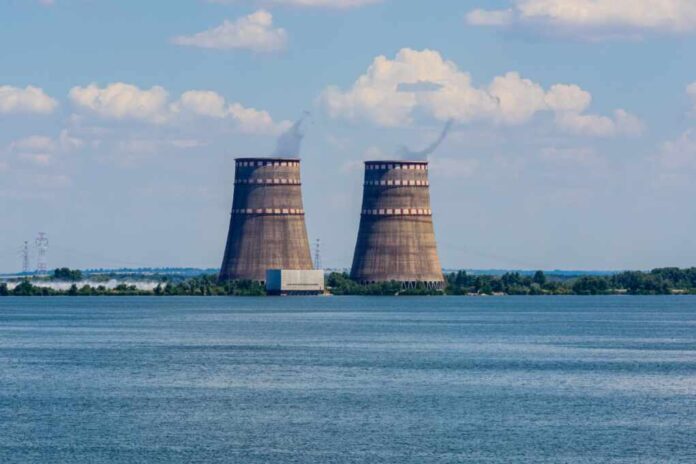
Russia’s control of Europe’s largest nuclear power plant, Zaporizhzhia, enters its fourth year amid conflicting forecasts for its restoration, revealing critical vulnerabilities in American energy security planning. Moscow’s recent licensing of a reactor signals permanent control, while repeated power disruptions risk a catastrophic meltdown, underscoring how this strategic energy asset is being weaponized to undermine Western interests and regional stability.
Story Highlights
- Zaporizhzhia Nuclear Power Plant remains under Russian control since 2022 seizure.
- Russian operators claim 18-month restart capability while Ukraine estimates 5+ years needed.
- Plant suffered 10+ power disruptions in 2025 alone, risking catastrophic meltdown.
- Russia licensed Unit 1 reactor in December 2025, signaling permanent control intentions.
Russian Control Consolidates Despite International Opposition
The Zaporizhzhia Nuclear Power Plant remains firmly under Russian military control, with Moscow’s nuclear agency Rosatom issuing an operational license for Unit 1 in December 2025. CEO Ramil Galiyev of the Russian-controlled operating organization claims the facility could resume operations by mid-2027 if hostilities cease immediately. This aggressive timeline contrasts sharply with Ukrainian assessments, revealing Russia’s determination to weaponize Europe’s largest nuclear facility for strategic advantage.
Russian forces seized the 5.7-gigawatt facility in March 2022, eliminating Ukraine’s access to roughly 20 percent of its pre-war electricity capacity. The plant’s six Soviet-era reactors have remained in cold shutdown since the occupation, requiring constant external power for critical cooling systems. Ukraine’s Energoatom estimates restoration would require 2-6 years if control returned to Kyiv, citing unknown damage from three years of Russian occupation.
Russia is losing control over nuclear technologies, – SZR
The Russian corporation "Rosatom" has for the first time purchased critical equipment for nuclear power plants abroad – two turbogenerator units from the Chinese state corporation Dongfang Turbine pic.twitter.com/7Ep1T3kc4q
— PPN – PulsePoint News (@wogoa1) December 26, 2025
Critical Infrastructure Faces Repeated Sabotage Attacks
Power disruptions to the facility have accelerated dramatically, with the 750-kilovolt transmission line severed for the tenth time on September 26, 2025. Each outage forces emergency diesel generators to prevent reactor meltdowns, creating cascading risks that international observers warn could trigger catastrophic failures. The plant’s cooling systems depend entirely on external electricity, making these attacks potential precursors to a nuclear disaster that would dwarf Chernobyl’s impact.
International Atomic Energy Agency Director General Rafael Grossi has repeatedly warned that military activities near nuclear sites risk long-term safety consequences. The facility’s backup systems have been tested beyond design limits, with multiple 330-kilovolt and 750-kilovolt line failures documented throughout 2025. These infrastructure attacks demonstrate how foreign powers can exploit America’s allies’ energy vulnerabilities, undermining regional stability and threatening global nuclear safety standards.
Strategic Energy Weapon Threatens Western Interests
Russia’s permanent control over Zaporizhzhia represents more than territorial conquest—it establishes a precedent for nuclear facilities becoming “war trophies” that undermines international law and energy security. Moscow’s December 2025 licensing of Unit 1 signals intentions to integrate the facility into Russia’s southern power grid, potentially supplying occupied territories while denying Ukraine critical energy resources. This strategic energy leverage complicates any future peace negotiations and demonstrates Russia’s willingness to weaponize civilian nuclear infrastructure.
The facility’s seizure forces Ukraine to rebuild 5-7 years of lost nuclear capacity while Russia gains a 5.7-gigawatt strategic asset. Ukrainian energy analyst Petro Kharchenko warns that assessment alone would require 2-3 years before any restoration efforts could begin, assuming Ukrainian forces eventually reclaim the site. This timeline disparity reveals how Russia’s nuclear hostage-taking creates long-term economic warfare against Western-aligned nations, setting dangerous precedents for future conflicts involving civilian infrastructure.
Watch the report: Nuclear plant looms over Ukraine talks
Sources:
- Zaporizhzhia Plant Could Resume Operations 18 Months After War Ends
- External power line to Zaporizhzhia nuclear plant has been restored, management says | Reuters
- Zaporizhzhia Plant Could Resume Operations 18 Months After War Ends | OilPrice.com
- What Happens When a Nuclear Power Plant Becomes a War Trophy? – Modern Diplomacy