
When a trusted pastor and jiu-jitsu instructor is arrested on multiple child sex-crime charges, the story is not just about one man’s alleged acts; it is about how abuse hides inside community institutions that parents are taught to trust.
Key Points
- Monterey County authorities arrested 51-year-old pastor and jiu-jitsu instructor Emmanuel Marchica on July 10, 2026, after an investigation into alleged ongoing sexual abuse of minors.
- Detectives say they identified multiple child victims, with disclosures dating back to 2012, and are actively seeking additional survivors who may not yet have come forward.
- Marchica was booked on several felony child-sex charges and is being held in Monterey County Jail on a $17.5 million bail, reflecting the severity and scope of the allegations.
- The case fits a wider, well-documented pattern of clergy and religious-leader abuse in California, where hundreds of credibly accused clergy have been identified and survivors often report only years later.
From Allegation to Arrest: What Investigators Say Happened
According to the Monterey County Sheriff’s Office, the case began on July 5, 2026, when deputies received a report alleging the ongoing sexual abuse of a child in their jurisdiction. The account was serious enough that the case was immediately assigned to investigators rather than being treated as a routine complaint. Detectives began interviewing the reporting party, potential witnesses, and others in the pastor’s orbit, and quickly developed additional information pointing to more than one alleged victim.
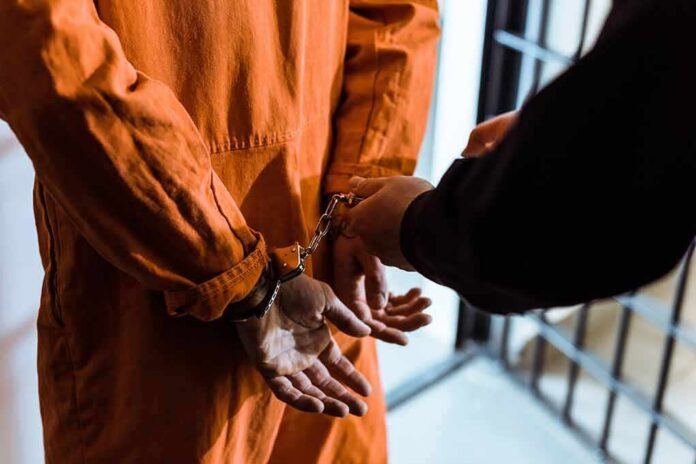
As the investigation expanded, detectives obtained and served multiple search warrants—an indication that they believed physical evidence, digital records, or business and ministry documents might corroborate what the children and witnesses were describing. Within five days of the initial report, the evidence they had gathered was sufficient, in their view, to establish probable cause and justify an arrest. On July 10, 2026, deputies took 51-year-old Emmanuel Marchica of Hollister into custody and booked him into the Monterey County Jail.
The Charges: What Marchica Is Accused Of
Booking records and the Sheriff’s public press release outline a set of serious felony charges tied specifically to child victims. Marchica was booked on:
• Lewd or lascivious acts with a child, charged under California Penal Code § 288(a), which covers intentional sexual touching of a child under 14 for the purpose of arousal or gratification.
• Sexual penetration of a child, Penal Code § 289(a)(1)(B), involving sexual penetration of a minor under specified ages and circumstances.
• Oral copulation with a child, Penal Code § 287(b)(1), applied when a child is forced, coerced, or otherwise illegally induced into oral sex.
• Annoying or molesting a child, Penal Code § 647.6(a)(1), a broad charge often used to capture sexualized conduct toward minors that may not fit neatly into more specific statutes.
The Sheriff’s Office also stated publicly that investigators identified multiple victims whose disclosures reach back to 2012. A YouTube breakdown of the case, based on the same press release, reported that at least four minors have already been identified as survivors, all described as “well under the age of 18,” and that some incidents allegedly occurred during massage therapy sessions connected to gyms Marchica owned or operated. That video cites witness statements as part of the probable cause foundation: investigators did not rely solely on children’s accounts; they also interviewed adults who say they saw conduct that concerned them.
Who Emmanuel Marchica Is Within His Community
Understanding the allegations requires understanding Marchica’s roles. The Sheriff’s Office describes him as a pastor who was “currently serving as a pastor and offering religious services on a regular basis at a community gathering center in the Hidden Valley Community of San Benito County on Cienega Road.” He did not lead a large denominational church with a traditional sanctuary; instead, he anchored religious services in a community-center setting, the kind of informal spiritual environment that often relies heavily on personal reputation and trust.
Beyond ministry, Marchica appears to have built a network of businesses and activities that brought him into close contact with families and children. Social coverage and local commentary describe him as a jiu-jitsu instructor, operator of gyms, and someone involved with massage therapy and possibly bakery operations. This mix is not incidental. Parents may view a martial arts instructor, physical therapist, and pastor as three separate trust signals pointing in the same direction: a caring, disciplined adult invested in community well-being. When allegations of abuse surface against such a figure, the sense of betrayal—and the difficulty survivors may face in coming forward—intensifies.
Bail, Ongoing Investigation, and the Legal Process Ahead
After his arrest, Marchica was booked into Monterey County Jail with bail set at $17.5 million. For a local case, that is an extraordinarily high figure. Bail is not a verdict; it is a risk assessment made by the court and, in some contexts, by law enforcement recommendations. A multimillion-dollar bail usually signals that authorities view the defendant as posing a substantial risk—whether of flight, danger to the community, or both—if released pending trial.
The Sheriff’s Office has explicitly said it believes there are additional victims and witnesses in the community who have not yet made contact with authorities. Detectives have published names and phone numbers for specific investigators and a supervising sergeant and underscored that the case remains open, with further search warrants and interviews likely. For families connected to Marchica’s religious services, gyms, or therapy practice, this means the investigation is not limited to a narrow timeframe; anyone with relevant information, even from years ago, may find that it is taken seriously in the current climate.
Legally, Marchica is entitled to the presumption of innocence and to contest the charges in court. The record at this stage is investigative, not adjudicative: arrest, booking, and bail decisions reflect probable cause and charging standards, not final judgment. Court schedules and filings—accessible through the Monterey County criminal case portal and clerk’s office—will show how the case progresses: whether preliminary hearings move forward, whether additional counts are filed, and whether the matter heads toward trial or potential plea negotiations.
Why Clergy and Religious-Leader Abuse Is a Systemic Problem
However disturbing these allegations are on their own, they sit inside a much larger, well-documented pattern of abuse by clergy and religious figures. Nationally, one major compilation of church data concluded that clergy sexual abuse affected over 95 percent of U.S. dioceses, with allegations made against 4,392 priests and deacons in ministry. California stands out within that picture. Advocacy and investigative research have identified hundreds of credibly accused clergy across the state, and separate studies have cataloged hundreds more in specific regions such as Southern California and the Los Angeles Archdiocese.
Several traits recur in these cases. Abuse often begins when victims are children or adolescents and continues over time, with survivors frequently waiting years—or decades—to speak openly or report to law enforcement. One analysis of clergy abuse in Catholic contexts notes that around 90 percent of accused priests had multiple allegations, underscoring that such abuse is seldom isolated to a single incident or victim. In California, a combination of legislative reform and civil litigation has created avenues for survivors to file claims long after the abuse occurred, including statutory “windows” that temporarily lift time limits for old cases.
The Marchica investigation reflects many of these broader patterns. Detectives say disclosures date back to 2012, meaning at least some alleged abuse is more than a decade old. Authorities are explicitly appealing to possible additional victims now—people who may have lived with their experiences in silence for years. As in numerous clergy cases, the alleged perpetrator’s positions of authority and trust—in ministry, sports instruction, and health-related services—may have made it harder for children and parents to interpret early warning signs or feel confident challenging him.
PRESS RELEASE – Monterey County Sheriff's Office Believes There Are Additional Victims Following Child Sexual Abuse Arrest –
The Monterey County Sheriff's Office has arrested a Hollister man following an investigation into the ongoing sexual abuse of a child. Detectives believe… pic.twitter.com/Lxl8Icn1zn
— Monterey Co Sheriff (@MCoSheriff) July 17, 2026
Trust, Access, and the Challenge for Parents and Communities
For a parent, the painful question is inevitable: if someone like this could be abusing children, how can I ever feel confident about the adults around my family? The reality is that abuse thrives where trust and unsupervised access intersect. Religious roles, coaching positions, and therapeutic services all involve adults spending significant time with minors, often in settings that are framed as nurturing, disciplined, or spiritually safe. When an abuser occupies such a role, the institutional trust can function as cover.
Several practical implications follow. First, reputational trust is not a safeguard; criminal background checks, supervised environments, and clear, enforced policies about physical contact and private meetings matter far more than an individual’s perceived holiness or charisma. Second, open channels for reporting—both within organizations and directly to law enforcement—need to be visible to children and families, not buried in policy manuals. In Monterey County, the Sheriff’s Office went out of its way to publish investigator contact information and to signal that prior incidents would be taken seriously.
Third, community leaders, including other clergy, have to assume that abuse is a risk in any setting involving children, not an aberration confined to distant institutions. The statistical reality in California and nationwide—thousands of accused clergy, hundreds in single regions, and major settlements involving hundreds of survivors—means that vigilance is part of responsible leadership, not a sign of mistrust.
What This Case Means Going Forward
The allegations against Emmanuel Marchica will ultimately be tested in the criminal courts of Monterey County. That process will determine whether he is convicted, acquitted, or subject to a negotiated resolution. Regardless of outcome, the investigation has already forced his community to confront how deeply abuse can embed itself inside organizations that present themselves as safe havens for children.
For survivors of clergy or religious-leader abuse elsewhere, cases like this can be both triggering and galvanizing. Seeing law enforcement act quickly, set high bail, publicly seek additional victims, and treat historic disclosures as credible may encourage others to come forward—whether to police, to civil attorneys, or to internal church authorities. California’s legal framework now offers more room for that step than it did in prior decades, particularly where statutes of limitation have been extended or temporary windows opened.
For parents, the sober takeaway is that safeguarding children requires a different kind of trust: trust in transparent procedures, in independent oversight, and in their own instincts when something feels wrong. Pastors, coaches, and therapists can be powerful forces for good in a child’s life. But they are not above scrutiny. The Monterey County case reinforces a hard-earned lesson from years of clergy-abuse investigations across California: when institutions invest as much in child protection as they do in programming and outreach, abuse is harder to hide—and victims are more likely to be heard.
Sources:
nypost.com, ksbw.com, instagram.com, montereyjailroster.org, montereycountycourt.us, californiacourtrecords.us, govinfo.gov, andersonadvocates.com, sandiego.edu, lacatholics.org, latimes.com, manlystewart.com, hermanlaw.com, en.wikipedia.org, injuryjusticeattorney.com