
When a landmark like the Brooklyn Bridge briefly catches fire during a nationally televised fireworks spectacle, the incident exposes a tension at the heart of modern public celebrations: a system engineered for safety that still cannot deliver absolute risk‑free spectacle.
Key Points
- The Macy’s 4th of July fireworks on the Brooklyn Bridge are a mature, heavily regulated production with decades of operational experience and extensive city coordination.
- The Brooklyn Bridge fire fits a broader pattern: any visible mishap at a high‑profile event is quickly framed as systemic failure, often before technical investigations are complete.
- Available evidence supports the fire as a limited, post‑show incident contained by FDNY, but the precise cause and safety lessons remain undocumented in public incident reports.
- National data on fireworks injuries and fires show that even highly professional displays operate within a narrow safety margin, where human factors and weather can tip conditions toward ignition.
- Trust in such events depends less on eliminating all incidents than on transparent post‑event reporting, credible oversight, and clear communication when something goes wrong.
How Brooklyn Bridge Became a Fireworks Platform
To understand why a fire on the Brooklyn Bridge during a Macy’s show attracts such scrutiny, you have to start with the bridge’s role in the spectacle itself. Macy’s has used the East River and its surrounding infrastructure as a pyrotechnic stage for decades, gradually evolving from barge-only shows to integrated displays where the bridge becomes a launch platform. In 2019, the company formally announced the bridge as the “centerpiece” of the nation’s largest Independence Day celebration, firing tens of thousands of shells and effects from both the bridge deck and multiple barges positioned nearby. By the mid‑2020s, that model had matured into a familiar configuration: multiple barges, carefully mapped viewing zones, and choreography that treats the bridge not as a passive backdrop but as a dynamic part of the show.
This integration has always required close municipal coordination. City agencies plan street closures months in advance, designate elevated portions of the FDR Drive for ticketed viewing, and align marine traffic rules with the fireworks footprint. The 50th anniversary show, branded as part of the America 250 celebrations, was not a pop‑up party; it sat atop a long history of iterative planning and operational learning. That context matters because it explains both how a technical mishap could occur and why the city is structurally invested in proving that it remains an outlier rather than a symptom of systemic failure.
The 2019 Bridge Fire: What We Actually Know
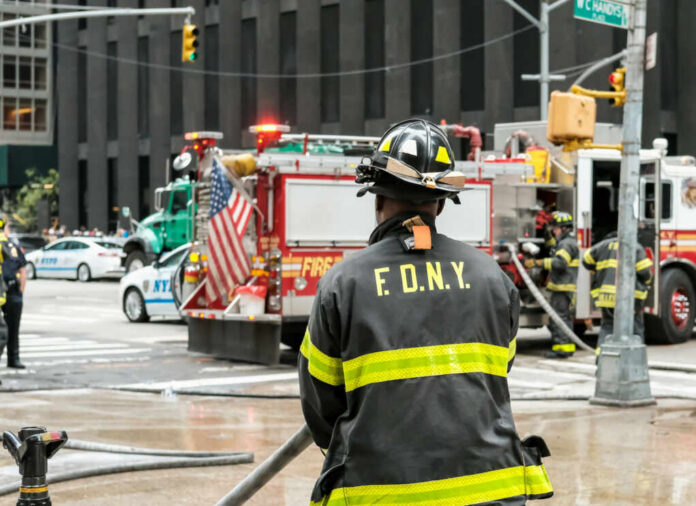
The canonical example of this tension is the 2019 incident in which firefighters “battled small flames on the Brooklyn Bridge after the Macy’s 4th of July Fireworks show.” Eyewitness News reported that the flames were visible from the south side of the bridge around 11 p.m., well after the show’s main salvo, and that FDNY had fireboats in position during the display itself to keep the area safe. In other words, the fire did not erupt in the middle of the televised finale; it appears to have been a post‑show ignition of debris or residual materials on the bridge structure, detected and addressed by crews who were already deployed in anticipation of such contingencies.
From an engineering and safety perspective, this matters. Fireworks launched from a bridge involve racks, wiring, and combustible packaging placed on or near a historic steel and stone structure. Even when devices function as designed, residual sparks, unspent pyrotechnic material, or smoldering fragments can lodge in crevices or temporary fixtures. The presence of FDNY fireboats, as documented in the ride‑along coverage, reflects a risk model that expects small ignitions and plans for rapid suppression rather than promising their impossibility. What is missing from the public record is a detailed FDNY incident report describing ignition source, material involved, and whether any procedural changes were recommended afterward—information that would transform “small flames” from news footage into a fully characterized safety event.
What “Isolated Incident” Really Means in This Context
Organizers and city officials frequently describe such episodes as isolated, and in narrow operational terms that is accurate: the Macy’s shows have proceeded for decades without major structural damage to bridges or mass casualties at the official viewing sites. The Brooklyn Bridge fire did not trigger collapse, prolonged closure, or reported injuries associated with the pyrotechnics themselves. City Hall’s subsequent statements about later East River shows emphasize “no serious injuries or violent incidents,” framing congestion and logistics complaints as the primary problems rather than safety failures. That pattern suggests a risk regime in which minor ignitions are considered manageable side effects of large-scale pyrotechnics, akin to small brush fires during wildfire season.
Yet describing the event as isolated also presumes a cause that has never been publicly documented. There is no named pyrotechnic expert explaining whether a misfire, weather-driven ember drift, or human error triggered the bridge flames. No FDNY technical summary is available that classifies the incident as within expected tolerances versus indicative of a procedure breakdown. Without that, “isolated” functions more as a reputational label than an evidence-backed conclusion. The system may have worked—FDNY saw and suppressed the fire—but the public cannot independently verify whether the underlying mechanism was acceptable by industry standards.
Media Amplification and the Spectacle of Failure
Because the Brooklyn Bridge is both infrastructure and symbol, any visible fire on its span during a widely broadcast event is irresistible to cameras. Footage circulates quickly, often stripped of nuance: a cascade of golden pyrotechnic “waterfall of fire” during the show looks spectacular in curated clips, while the later, unintended flames read as proof that the spectacle got out of hand. News outlets have strong incentives to lead with the striking image—“Brooklyn Bridge catches fire”—even when the underlying event is technically minor. Social media compounds this by privileging short, dramatic video over context.
This amplification is not unique to New York. National data show that fireworks start tens of thousands of fires each year in the United States, including structure, vehicle, and outdoor incidents, leading to deaths, injuries, and significant property damage. When an incident attaches to a named brand (Macy’s) and a globally recognized landmark (the Brooklyn Bridge), narrative gravity pulls it into a story about corporate risk-taking and municipal oversight, regardless of whether the facts fit that frame. The organizers’ relative silence in the immediate aftermath—no detailed Macy’s press release dissecting the ignition mechanism—leaves the narrative vacuum to be filled by images rather than analysis.
Professional Fireworks in a Rising-Risk Landscape
The broader safety landscape around fireworks complicates public expectations. Over the past 15 years, fireworks-related injuries in the U.S. have increased by roughly 25%, with emergency departments treating thousands of cases each year and documenting multiple deaths annually. Recent estimates cluster around 13,000–15,000 injuries per year, with burns dominating the injury profile and hands, fingers, head, and face most frequently affected. July 4th sits at the peak of that risk curve, as both consumer and professional displays saturate communities.
Safety organizations—from the Consumer Product Safety Commission to the National Safety Council—consistently advise the public to avoid backyard fireworks and attend professional shows instead, on the assumption that trained crews and regulated devices substantially reduce risk. That assumption is directionally sound: the most severe and chaotic incidents tend to involve illegal or misused consumer devices. But national fire data show that professional-level displays are not risk-free; they are embedded in an industrial context where human error, equipment failure, and environmental conditions still drive accidents. In that setting, a small, quickly contained fire on the Brooklyn Bridge is neither shocking nor trivial—it is an expected manifestation of a hazard profile that professionals manage rather than erase.
Governance, Ticketing, and Perceived Control
One reason the Brooklyn Bridge fire story resonates is that it intersects with a separate axis of public concern: crowd management and the sense of institutional control. New York City’s move to issue 100,000 free tickets for prime viewing areas along Brooklyn Bridge Park and the waterfront signaled an effort to tightly manage spectators. Street-closure plans, bag checks, and NYPD screening at entry points were designed to create a controlled environment where risk could be constrained geographically and demographically.
Yet subsequent reporting on the waterfront shows documented significant logistical failures—ticket-holders unable to access piers, bottlenecks, and frustration—described by some as a “total fiasco.” City Hall’s response emphasized that the show itself was safe and that congestion was an inevitable byproduct of tens of thousands of people converging on a single area. In that light, the bridge fire acquires symbolic weight: it appears to puncture the narrative of control built around ticketing and closures. Even if the flames were minor, they visually undermine the promise that a high-profile, America 250‑branded event is both spectacular and flawlessly safe.
What Evidence Would Settle the Safety Debate?
From an expert standpoint, the question is not whether any fire occurred—that much is visually and journalistically documented—but whether it reflects an acceptable risk envelope. Resolving that requires specific, technical evidence that is currently absent from public discourse: FDNY incident reports detailing ignition source and material involved; internal safety audits by the fireworks contractor; and post-event reviews by NYPD and city event coordinators assessing whether procedures worked as designed or require revision. None of these documents are visible in the current research set, which is why assertions of “isolated incident” or “safety failure” remain interpretive rather than evidentiary.
If those reports ultimately confirm that the fire was small, quickly suppressed, and consistent with known residual hazards of bridge-launched pyrotechnics, the rational response is not outrage but refinement: adjust cleanup protocols, improve post‑show inspections, and keep fireboats positioned until debris has cooled. If, on the other hand, the ignition stemmed from a misconfiguration of racks, inadequate shielding of combustible surfaces, or rushed procedures under weather pressure—as suggested by 2026 accounts of storm‑threatened shows with altered start times—then the same evidence would justify tighter engineering standards and more conservative go/no‑go criteria. Either way, the path forward lies in documented analysis, not in social-media clips.
Living With Risk at Iconic Public Events
For the seasoned observer of public spectacles, the Brooklyn Bridge fire is neither a scandal to be dismissed nor a catastrophe to be sensationalized. It is a real, visible reminder that large-scale pyrotechnics on historic infrastructure operate within a thin margin where design, procedure, and response must all function well, and where perfection is not a realistic benchmark. The structure of modern governance—America 250 designations, national broadcasts, elaborate ticket lotteries—encourages us to expect zero incidents from events that are, by their nature, deliberately flirting with combustion.
The adult way to reconcile those expectations is not to abandon the shows or pretend the risks are negligible, but to demand transparency about how they are managed: clear pre‑event safety engineering, candid post‑event reporting when something ignites, and consistent regulatory scrutiny that treats even small fires as data points for improvement. When the Brooklyn Bridge catches fire during—or just after—a fireworks display, the system’s success is measured less by whether the flames existed at all than by how quickly they were understood, contained, and learned from. Anything less leaves the narrative to be written by images alone.
This is a header
This is a paragraph.
Sources:
nypost.com, cbsnews.com, abc7ny.com, macysinc.com, instagram.com, lake.com, brooklynbridgeparents.com, theeducatedpatient.com, hsi.com, cpsc.gov, nfpa.org, facebook.com