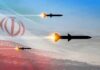

As bombs fall on southern Lebanon despite signed ceasefires, Washington is busy arguing over January 6 and Donald Trump’s passport instead of asking who keeps green-lighting endless war.
Story Snapshot
- Israeli strikes continue across southern Lebanon even after multiple ceasefire deals, raising questions about “self-defense” versus treaty violations.[5][21]
- Hezbollah and Lebanese officials say Israel is using the truces as cover to expand occupation zones and demolish homes, displacing tens of thousands.[20][25]
- The United Nations and human rights groups report thousands of Israeli airspace and ground violations and large-scale destruction of civilian areas.[21][25]
- President Trump backs Israel’s actions as “separate skirmishes,” sending mixed signals about whether U.S.-brokered ceasefires actually restrain anyone.[1][4][27]
Ceasefires on Paper, Airstrikes on the Ground
In late 2024, the United States and France helped broker a ceasefire between Israel and Hezbollah meant to cool fighting along the Lebanon border.[21] The deal called for both sides to stop attacks and respect Lebanese sovereignty, while the Lebanese army moved into the south. Yet since that truce, Lebanon’s authorities and international monitors have logged thousands of violations, mostly by Israel. Reports describe near-daily strikes and demolitions that have killed hundreds of civilians and blocked many families from going home.[21]
The pattern continues into 2025 and 2026. United Nations experts warn that Israeli forces are still carrying out air and drone attacks in southern Lebanon almost every day, despite the ceasefire.[2] They say these actions damage schools, clinics, and places of worship and keep more than 80,000 people from returning to their homes.[2] Lebanese reports describe strikes on cars and villages that cause new casualties even as diplomats talk about peace. This gap between agreements and reality feeds deep public distrust of international deals.[2]
Israel’s Self-Defense Claims versus Lebanese and UN Data
Israel says its operations in Lebanon are defensive moves against Hezbollah fighters and rocket teams that keep firing across the border.[5][7] Military officials claim that overnight barrages of more than 50 projectiles forced them to hit launch sites and militant positions in places like Nabatieh.[6][7] They argue that some targets lie south of the Litani River in areas where Hezbollah was supposed to pull back under earlier agreements. From this view, airstrikes are not breaking the truce but enforcing it.[5][7]
Lebanon, Hezbollah, and many international observers see something very different. Lebanese ministries report thousands of deaths and injuries from Israeli attacks since the latest round of fighting began, with most casualties in the south.[4] The Norwegian Refugee Council and United Nations peacekeepers describe repeated strikes on villages and even parts of Beirut, plus new walls and positions that extend Israeli control beyond the official border.[21] By late 2025, United Nations forces had counted more than 7,800 airspace violations and over 2,500 ground breaches by Israel in just one year.[21][25]
Human Rights Groups Warn of Extensive Destruction
Amnesty International’s research in southern Lebanon shows wide destruction of homes and infrastructure after the ceasefire.[13][25] Their analysts used satellite images and field visits to review more than 10,000 damaged or destroyed structures between October 2024 and January 2025.[25] They argue that many demolitions and bombings do not meet the standard of “imperative military necessity” under the laws of war, meaning they may be unlawful even if Israel claims they are aimed at Hezbollah.[13][25]
Other rights groups share similar concerns. The Global Centre for the Responsibility to Protect reports that Israel has kept up raids and airstrikes across Lebanon and continues to occupy several locations in the south despite truce terms.[25] Human Rights Watch found repeated attacks on roads, utilities, and building equipment that are needed to rebuild damaged areas.[25] Together, these findings paint a picture of conflict where civilians pay most of the price while powerful states argue over legal language from a safe distance.
Washington’s Role and the “Deep State” Disconnect
The United States sits at the center of these deals yet also sends mixed messages. One Trump-era ceasefire framework gave Israel the right to act in self-defense against planned or ongoing threats, even during a truce, while saying offensive operations must stop.[27] Soon after, Israeli attacks in southern Lebanon continued, and Lebanese officials accused Washington of writing loopholes that let the war roll on anyway.[27] For many Americans, this looks like the same old pattern: strong words about peace, weak follow-through when allies ignore the rules.
ISRAEL IS DESTROYING LEBANON
NOT BY AN EARTHQUAKE
paulo jorge
PHOTO/TEXT AP:
Residents drive past buildings destroyed in previous Israeli airstrikes in the town of Nabatiyeh, southern Lebanon, June 24, 2026 following a ceasefire between Israel and Hezbollah
AP Photo/Bilal Hussein pic.twitter.com/xQ0MWqL0HE— Paulo Jorge (photo P.J., LA 1989) (@PauloCruzJCO) June 29, 2026
President Trump has at times backed Israeli strikes as “separate skirmishes” outside broader ceasefire deals, especially when talking about the U.S.-Iran agreement.[1][4] That stance pleases some conservatives who support an aggressive “America First” posture but alarms others who see endless foreign wars draining money and attention from problems at home.[4] Liberals who worry about civilian harm and growing global resentment see these moves as proof that the foreign policy establishment, the so-called deep state, will always find a way around promises of restraint.[21][25]
Why This Matters Beyond the Middle East
For many Americans on both the right and the left, the Lebanon story ties into a larger fear: that the federal government listens more to generals, lobbyists, and foreign leaders than to ordinary citizens. The same Washington that struggles to fix border chaos, inflation, and crime is signing complex ceasefires that powerful allies can break with little pushback. As long as bombs keep falling after each “historic deal,” people will ask whether these agreements are meant to stop war or to manage public outrage.
Sources:
[1] YouTube – ISRAEL STRIKES LEBANON AMID J6 BOMBSHELL & TRUMP PASSPORT! | AMERICAN …
[2] Web – Two killed in Israeli strike in South Lebanon, Hezbollah denounces …
[4] YouTube – Southern Lebanon struck again: Israeli attacks despite ceasefire …
[5] Web – Hezbollah Accuses Israel of Ceasefire Violation as Deadly Strikes …
[6] Web – 2024 Israel–Lebanon ceasefire agreement – Wikipedia
[7] Web – Air strikes hit Nabatieh in southern Lebanon on Saturday as the …
[13] YouTube – Israeli Airstrikes Rock Southern Lebanon As Hezbollah Positions …
[20] Web – Hezbollah rejects Israel-Lebanon agreement as Israeli attacks hit …
[21] Web – Israel has committed 220 ceasefire violations between April 17 and …
[25] Web – Israel has committed violations of a 10-day ceasefire in Lebanon …
[27] Web – Reinforcing the Shaky Israel-Lebanon Ceasefire