
A 125‑year‑old Supreme Court case now stands between reforming birthright citizenship and preserving a legal magnet for illegal immigration.
Story Snapshot
- Birthright citizenship in America rests on the 1898 Supreme Court case United States v. Wong Kim Ark.
- That decision reads the Fourteenth Amendment to grant citizenship to almost everyone born on U.S. soil, with narrow exceptions.[9]
- Modern activists now use this reading to defend automatic citizenship for children of illegal immigrants.[4][8]
- Changing the rule likely requires either a new Supreme Court ruling or a full constitutional amendment.[5][21]
How One 1898 Case Still Drives Today’s Border Fights
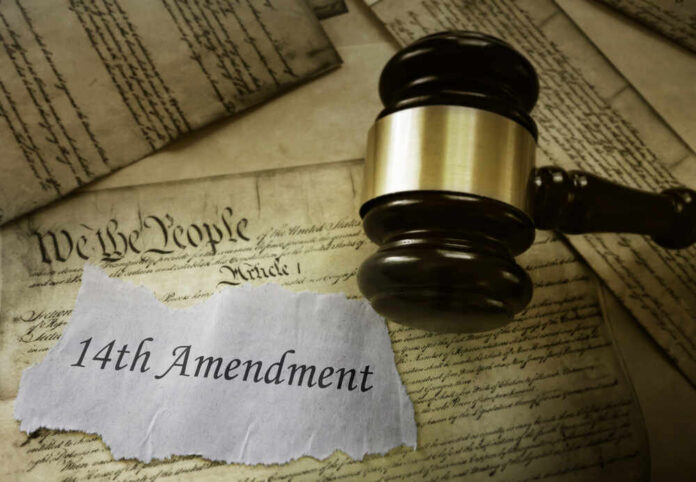
Most people have never heard of Wong Kim Ark, but his 1898 Supreme Court case quietly controls who becomes an American the moment they are born here.[9] The Court ruled that a man born in San Francisco to Chinese parents, who were not citizens, was automatically a citizen by the Fourteenth Amendment’s Citizenship Clause.[9] That clause says all persons born or naturalized in the United States, and subject to its jurisdiction, are citizens of the United States.[9]
Justice Horace Gray’s majority opinion leaned heavily on old English common law, which tied citizenship to the soil where you are born, not to your parents’ passports.[9] The Court said the amendment “affirms the ancient and fundamental rule of citizenship by birth within the territory” and includes children of “resident aliens,” with narrow exceptions such as children of foreign sovereigns, diplomats, and enemies in hostile occupation.[2] It also recognized a historical exception for members of Indian tribes who owed direct allegiance to their tribes.[2]
What “Subject to the Jurisdiction” Was Supposed to Mean
The key fight then and now turns on the phrase “subject to the jurisdiction thereof.”[3] The Wong Kim Ark majority read that phrase to cover almost all children born here whose parents live under U.S. law and protection, even if the parents are foreign subjects.[2][9] A National Constitution Center summary explains that the Court treated noncitizen parents as under U.S. allegiance while domiciled here, so their U.S.-born children were within the amendment’s protection.[3]
Two justices dissented and argued that the “accident of birth” on U.S. soil should not control citizenship in every case.[12] Later teaching materials highlight that “subject to the jurisdiction” was tied to full allegiance, and that the amendment’s framers wanted only two paths to citizenship: birth and naturalization.[3] Today’s critics of automatic birthright citizenship for illegal immigrants often point back to that jurisdiction language and those narrow exceptions to argue for a tighter reading.
How Courts and Bureaucrats Expanded Birthright Citizenship
In the decades after Wong Kim Ark, courts, Congress, and federal agencies treated the case as settling that almost everyone born on U.S. soil is a citizen.[1][8] Modern scholarship describes the decision as holding that “all born on U.S. soil are U.S. citizens,” regardless of their parents’ immigration status.[8] The State Department’s Foreign Affairs Manual cites Wong Kim Ark as confirming citizenship for a California‑born child of Chinese subjects who were not diplomats, and treats that rule as controlling guidance.[7]
Advocacy groups now summarize the doctrine in sweeping terms. The American Immigration Council, for example, says the ruling established that “anyone” born in the United States is a citizen at birth, no matter the parents’ status.[21] It argues that taking away birthright citizenship would require either a new constitutional amendment or a radical break by the Supreme Court from long‑standing precedent.[5][21] This broad framing is what many conservatives see as a legal shield for “birth tourism” and for automatic citizenship for children of illegal border crossers.
Trump’s Second Term, Executive Orders, and the Coming Showdown
When President Trump returned to office, he moved quickly to test that precedent head‑on.[18][23] In his second term, he signed an executive order aimed at denying citizenship to children born here to parents who are in the country illegally or only temporarily, such as on student or work visas.[18] Legal analysts note that the order’s clear target is the current reading of the Fourteenth Amendment and Wong Kim Ark’s broad rule.[18]
Birthright Citizenship
A plausable statement about Birthright Citizenship in the United States:
Stating that birth on U.S. soil alone confers citizenship is directly contradicted by the plain text of the clause itself. The conjunctive "and subject to the jurisdiction thereof"…
— Frederick Wertz (@wertzfe) June 22, 2026
A Brennan Center analysis argues the order is unconstitutional, pointing out that all three branches of government have long read the Fourteenth Amendment to grant a broad form of birthright citizenship with only narrow exceptions for diplomats and similar cases.[18] It cites congressional records suggesting Reconstruction‑era lawmakers meant to include the children of immigrants, regardless of legal status, within the Citizenship Clause.[18] Supporters of Trump’s move respond that those lawmakers never faced today’s massive illegal migration and did not discuss “unauthorized aliens” at all.[23]
Where Could Birthright Citizenship Go From Here?
Historical research and mainstream legal groups say the safest reading of current law is that changing birthright citizenship would require either a formal constitutional amendment or a sharp turn by the Supreme Court.[5][21] Amending the Constitution would demand two‑thirds of both houses of Congress and ratification by three‑quarters of the states, a steep climb in today’s divided country.[5][21] That makes the Court the more likely arena, especially with legal challenges to Trump’s order already moving through the system.[18]
For now, Wong Kim Ark still stands as binding precedent, and federal agencies continue to treat nearly every child born on American soil as a citizen, so long as the parents are not foreign diplomats or enemy occupiers.[2][7] But the fight over what “subject to the jurisdiction” means is no longer a dusty law‑school debate. It is now tied to border security, national identity, and whether Washington will keep rewarding illegal presence with one of the most precious things America can give: citizenship.[4]
Sources:
[1] Web – What Will Happen to Birthright Citizenship?
[2] Web – United States vs. Wong Kim Ark | Law | Research Starters – EBSCO
[3] Web – UNITED STATES v. WONG KIM ARK. | Supreme Court | US Law
[4] Web – United States v. Wong Kim Ark – The National Constitution Center
[5] Web – March 28, 1898: Wong Kim Ark Wins Citizenship Case
[7] Web – Birthright Citizenship Hub
[8] Web – 8 FAM 102.3 SUPREME COURT DECISIONS – Foreign Affairs Manual
[9] Web – Departure Statement of Wong Kim Ark, 1894 | National Archives
[12] Web – Birthright Citizenship in America: From United States v. …
[18] YouTube – Birthright Citizenship: US v Wong Kim Ark
[21] Web – A Brief History of Citizenship in the 14th Amendment to the U.S. …
[23] Web – [PDF] Originalism and Birthright Citizenship – Georgetown Law