
When a 173-year-old landmark church in Bushwick is gutted in minutes by a three-alarm blaze, the stakes are not only the loss of a building, but the integrity of how a city investigates potential arson against its historic houses of worship.
Key Points
- A massive three-alarm fire destroyed the landmarked South Bushwick Reformed Church, collapsing its recently restored steeple and hollowing the sanctuary.
- Nearly 200 FDNY firefighters responded; one firefighter suffered minor injuries and there were no civilian casualties.
- Fire marshals and FDNY investigators are actively probing the cause, formally treating the incident as a possible arson case, but have publicly reported no evidence of suspicious activity so far.
- Social media claims about a “person of interest” seen fleeing the church conflict with official statements, highlighting gaps between community narratives and the public record.
- The fire sits within a broader pattern: documented arsons and suspicious fires at houses of worship nationally and a cluster of recent historic church fires in New York City have stirred debate over protection, maintenance, and municipal response.
A Landmark Lost in Minutes
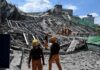
The South Bushwick Reformed Church stood at Bushwick Avenue and Himrod Street for more than a century and a half, dedicated in 1863 and designated a New York City landmark in 1968. On a Friday afternoon just before 1:30 p.m., cell phone video from across the street captured flames racing up its wooden steeple; within minutes, the spire was fully engulfed and then collapsed in a shower of burning debris. The church had recently invested in extensive restoration of that steeple, making the violent failure not only a structural loss but a bitter culmination of years of preservation work.
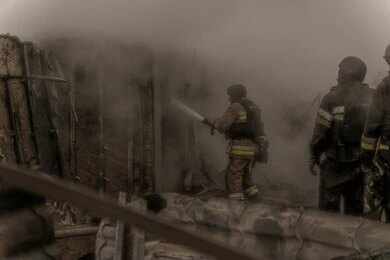
The FDNY response escalated quickly. Officials describe a three-alarm fire that drew roughly 200 firefighters and more than 40 units to the scene, focused on battling a deep-seated blaze in a large, aging structure. One firefighter sustained minor injuries and refused medical attention; there were no civilian injuries, in part because the sanctuary was unoccupied when the fire broke out. Crews concentrated on preventing extension to the rectory and neighboring buildings, a classic “exposure protection” problem when a major fire starts in a dense, mixed-use corridor.
What Investigators Know – and Don’t Know – About the Cause
As the smoke cleared, the most consequential question remained unresolved: how did the fire start? FDNY officials and Fire Marshals have been explicit that the cause is under active investigation. Multiple outlets, including NY1 and CBS New York, report that the fire marshals continue to probe the origin point, burn patterns, and any potential evidence of accelerants, a standard protocol when a major house of worship is destroyed. At this stage, though, they have publicly stated that they have found no evidence suggesting suspicious activity and do not currently consider the fire “suspicious.”
That language matters. When investigators describe a blaze as “not suspicious” while still investigating, they are indicating that early scene examination—looking at where the fire appears to have started, how it spread, and what physical remnants are visible—has not yet produced classic markers of arson. Those markers might include multiple distinct points of origin, obvious accelerant traces, forced entry to a normally secure space, or ignition in locations unlikely for accidental failures, such as the middle of a sanctuary floor away from wiring or equipment. In Bushwick, published accounts do not cite any such indicators so far. Officials have instead emphasized the technical work ahead: forensic fire analysis, interviews with witnesses who first saw smoke, and review of any available surveillance footage from adjacent properties.
The “Person of Interest” Claim and the Public Record
Alongside official statements, a sharply different narrative surfaced on social media. A New York Daily News Facebook post asserted that “a person of interest was seen fleeing from the South Bushwick Reformed Church moments before the blaze broke out,” implying that someone leaving the scene may be central to an arson theory. In the evidentiary record available to the public, that specific claim stands alone. No outlet provides a named witness, corroborated description, or timeline tying that alleged flight to a confirmed ignition point. Authorities have not publicly repeated, endorsed, or directly refuted the assertion.
That creates a gap between rumor-level information and the formal investigation record. On one side, FDNY and city officials have said they see “no signs pointing them in the direction of suspicious activity” while still keeping the case open. On the other, the social post suggests the existence of at least one witness who perceived the scene as potentially criminal. Absent formal confirmation, that witness would need to be identified, interviewed, and their account tested against time stamps from 911 calls, video footage, and fire progression modeling before it could materially change the investigative posture. Until that happens in the public record, the claim remains a contested fragment rather than a proven lead.
Inside a Modern Arson Probe at a Historic Church
To understand why investigators pursue possible arson even when early evidence is thin, it helps to look at national patterns. The Justice Department’s National Church Arson Task Force has logged more than 670 arsons, bombings, or attempted bombings at houses of worship since 1995. Fire-risk specialists note that many of those attacks have been deliberate, ideologically or hate-motivated, and often aimed at older, architecturally significant buildings whose construction makes them especially vulnerable to rapid fire spread. That history has pushed fire services to treat any major house-of-worship fire as a potential crime scene until accidental causes can be firmly established.
A modern arson probe at a site like South Bushwick typically unfolds on several tracks. Forensic teams re-enter as soon as conditions are safe enough, mapping the fire’s likely origin and path of travel. They examine wiring, panels, appliances, and any construction work zones for signs of electrical failure or improper hot work; they collect samples from suspicious burn patterns for laboratory testing to detect accelerants. Simultaneously, investigators canvas the area for surveillance footage—small businesses, residential doorbell cameras, traffic cameras—that might show unusual movement, early smoke, or someone entering or leaving the property in a way that conflicts with known occupants.
In Bushwick, cell phone videos already show the steeple well involved when bystanders began recording, which helps bracket the time window between first ignition and visible exterior involvement. The next step is to align that visual timeline with call logs, witness accounts, and any electronic or mechanical systems in the building, such as alarm triggers. None of that detail has yet been released publicly; the institutional silence about investigative specifics is consistent with standard practice, but it leaves the community to speculate in the absence of clear updates.
Community Grief, Cultural Memory, and the Focus on Rebuilding
For Bushwick residents, the fire’s immediate meaning was less about investigative complexity than about the loss of a spiritual and cultural home. Neighbors interviewed on scene described the church as a place where generations had been baptized, married, and buried, and where community services ranging from food pantries to arts programs were woven into the fabric of local life. One witness said simply, “It’s like a 200-year-old church. You can’t replace that. You can’t get that back. You can’t build it.”
Elected officials echoed that sense of loss. New York Attorney General Letitia James stood alongside the pastor and congregants, underscoring that “church is more than a structure” and pledging to help secure grants and funding to rebuild, making use of the church’s landmark status to tap preservation and disaster resources. Within days, the congregation shifted Sunday services online, and local organizers began discussing fundraising and interim worship spaces. Media coverage has largely centered on that resilience narrative—how the community will “build back”—rather than the technical details of the fire investigation, which shapes public attention away from causation and toward recovery.
Historic Church Fires and a Broader New York Pattern
The South Bushwick fire is not an isolated event. Recent years have seen a cluster of significant fires at historic churches across New York City, from Flatiron to Astoria and Bushwick itself. In Queens, for example, the vacant former First Reformed Church of Astoria was gutted by a five-alarm fire that hollowed out the structure and forced its demolition; investigators there also described the cause as under examination, with no immediate public determination. Social media commentators have begun to link these incidents, arguing that “recent historic church fires in New York City have reminded many people” of the vulnerability of sacred spaces and questioning whether municipal maintenance oversight and protective measures are adequate.
Analysts caution against assuming a single cause across such cases. Each fire arises in a distinct context: different occupancy status, maintenance histories, electrical systems, and neighborhood conditions. A vacant church undergoing renovations may be more prone to accidental ignition from construction or degraded wiring, whereas an actively used sanctuary might be at greater risk of targeted attack or accidental fire from daily operations. Nonetheless, the cluster has fueled political debate, including claims that multiple houses of worship have burned since particular officials took office and that this pattern deserves focused policy attention.
The FDNY and NYPD are coordinating on an investigation of last month’s massive fire at a historic Brooklyn church as an arson incident.
A person of interest was seen fleeing from the South Bushwick Reformed Church moments before the blaze broke out on June 19 around 1:20 p.m. on…
— Crime In NYC (@Crime_In_NYC) July 12, 2026
Why the Arson Question Matters Even Without Clear Evidence
Against that backdrop, the decision to keep arson on the table in Bushwick even as officials report no suspicious evidence so far is not gratuitous; it is part of modern risk management. Given the documented history of worship-site arsons, investigators must rule out deliberate ignition carefully before settling on accidental explanations. That requires time, technical rigor, and, crucially, transparent communication once conclusions are reached. If the fire ultimately traces back to an electrical fault, deferred maintenance, or a construction-related spark, the lesson will be about preservation practice and building safety for aging landmarks. If it proves to be deliberate, the implications shift sharply toward hate-crime enforcement, security planning for religious communities, and the adequacy of protection for culturally significant sites.
At the moment, the public record supports three solid points: the South Bushwick Reformed Church was catastrophically damaged in a three-alarm fire; investigators are actively analyzing the cause; and as of the latest statements, officials have not identified evidence of arson or suspicious activity. Everything beyond that—from social media claims of a fleeing “person of interest” to larger narratives about a citywide pattern—is still in the realm of hypothesis and political framing, not proven fact. For a community trying to grieve, rebuild, and understand what happened to its landmark, the eventual clarity of the investigation will matter as much as the physical reconstruction of the church itself.
Sources:
nypost.com, abc7ny.com, facebook.com, nytimes.com, instagram.com, ny1.com, brooklynpaper.com, nbcnewyork.com, youtube.com, justice.gov, fireriskheritage.net