
Ukraine’s wartime command structure has now proven something rarer than a battlefield breakthrough: sustained street protest, in a country under martial law and full-scale invasion, forced a sitting president to reverse a major personnel decision within days.
Key Points
- President Volodymyr Zelensky dismissed Commander-in-Chief Oleksandr Syrskyi on July 21, 2026, replacing him with Major General Mykhailo Drapatyi.
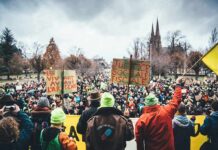
- The firing followed roughly a week of protests across Kyiv and other cities that began after the earlier removal of Defense Minister Mykhailo Fedorov.
- Drapatyi was widely seen as Fedorov’s preferred successor, making the appointment read as a concession to demonstrators’ demands.
- Multiple outlets explicitly framed the move as Zelensky “bowing to public pressure,” though the president also cited a deeper, longstanding institutional rift.
- This is the second time in roughly two years that Zelensky has removed his top general — Syrskyi himself replaced Valerii Zaluzhnyi under similar political strain in February 2024.
What actually happened, in sequence
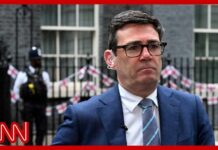
The chain of events is not seriously disputed across the reporting. On July 15, 2026, Zelensky dismissed Fedorov, Ukraine’s youngest-ever defense minister and the official most closely associated with the country’s drone-warfare buildup. The removal triggered protests within days across roughly a dozen Ukrainian cities. Demonstrators initially demanded Fedorov’s reinstatement; as the underlying dispute between Fedorov and Syrskyi became public, the demand shifted to removing the commander-in-chief himself. By July 21, Zelensky had signed the decree dismissing Syrskyi and installing Drapatyi, commander of the Joint Forces, in his place — a figure protesters and Fedorov allies had openly favored.
Crowd size matters for how one weighs this. FRANCE 24’s Kyiv correspondent Gulliver Cragg described the demonstrations as involving “only a few thousand people” in the capital and smaller numbers in regional centers — not, by any conventional measure, a mass uprising. Yet in a country under active invasion, where public assembly carries real legal and security risk and where national unity is treated as a wartime asset, even modest, sustained crowds function differently than they would in peacetime. Several outlets captured that asymmetry directly, calling the outcome a “victory for protestors” regardless of the numbers involved.
Why the official explanation is more complicated than “he caved”
Zelensky’s own account resists the simplest reading. He described the conflict between the General Staff and the defense ministry as “systemic,” occurring “at various levels,” and said Syrskyi and Fedorov had only been able to work together with his personal mediation. That is not the language of a leader who suddenly discovered a personnel problem under protest pressure; it is the language of someone managing a fracture that had been building for months, if not longer. The dispute reportedly centered on how aggressively to pursue drone-centric reform and decentralized command innovation — Fedorov’s signature project — against a more conventional, casualty-tolerant approach associated with Syrskyi, who had earned the unflattering nickname “the butcher” among critics in military and protester circles.
This matters because it complicates any single-cause narrative. The evidence supports both readings simultaneously: protests plainly preceded and coincided with the dismissal, and outlets from the Telegraph to NPR used explicit “bowed to pressure” framing; but the underlying command dispute over war strategy was real, acknowledged by Zelensky himself, and had been simmering before a single protester took to the street. The honest assessment is that the protests did not manufacture a conflict out of nothing — they accelerated and made public a resolution to a fight that was already underway inside Ukraine’s wartime institutions.
A pattern, not an aberration
Ukraine’s command structure has proven remarkably unstable at the very top since 2022, and this is not the first time political pressure has visibly shaped a change of commander. Zelensky removed Valerii Zaluzhnyi — Syrskyi’s own predecessor — in February 2024, in what was at the time called the biggest shakeup of the war; Syrskyi was his replacement. That earlier reshuffle also touched more than a dozen senior positions across the armed forces. Viewed against that history, the Syrskyi dismissal looks less like a singular capitulation and more like the recurrence of a structural pattern: Ukrainian wartime leadership churns at the top roughly every eighteen to twenty-four months, and each churn has been accompanied by public friction over strategy, casualties, and the balance of power between civilian and military authority.
What differs this time is the visibility of the trigger. Zaluzhnyi’s removal was driven largely by elite-level disagreement and reported friction with Zelensky over mobilization policy, playing out mostly in briefings and leaks. Syrskyi’s removal played out in the street, on video, with named protest leaders issuing explicit ultimatums and deadlines to the presidential office. That shift — from backroom disagreement to public ultimatum — is itself a meaningful data point about the durability of Ukrainian civil society’s leverage even under martial law, where public assembly is legally constrained and criticism of the military carries genuine risk.
Ukrainian President Volodymyr Zelensky on Tuesday sacked his Soviet-trained army chief Oleksandr Syrsky following a political crisis triggered by the removal of a popular, young and tech-savvy defense ministerhttps://t.co/YPkHmX7dXp
— The Defense Post (@DefensePost) July 22, 2026
Where the record is genuinely thin
Readers should be careful not to over-read the available evidence in one direction. No source in the current record includes the full text of the presidential decree, the complete Telegram statement, or any internal record of Zelensky’s deliberations with commanders in the days before the decision. What exists is a consistent journalistic characterization — protests preceded the firing, the preferred successor of the protest movement got the job, and outlets across the political spectrum used the vocabulary of concession — but not a documented admission that protest pressure was the decisive, or only, cause. The strategic dispute over command philosophy was real and acknowledged; it is entirely possible, and consistent with the evidence, that both forces pushed in the same direction at once.
That caveat does not weaken the core finding. The temporal sequence, the alignment between protester demands and the actual outcome, and the explicit characterization by multiple independent outlets — the Telegraph, FRANCE 24, NPR among them — form a coherent and mutually reinforcing picture. The absence of a leaked transcript does not erase that; it simply means the precise weighting between “public pressure” and “internal reform logic” remains an inference rather than a confession, which is the normal condition of wartime political reporting rather than a defect specific to this episode.
What it signals going forward
The practical consequence is twofold. First, it confirms that Ukraine’s civilian leadership remains sensitive to public opinion even amid existential war, a fact with implications for how allies and adversaries alike read Kyiv’s political durability. Second, it elevates Drapatyi — a younger, reform-aligned commander closely tied to Fedorov’s drone-and-innovation agenda — into the most consequential military post in the country, at a moment when the war’s technological character continues to outpace its institutional one. Whether Drapatyi’s tenure proves more stable than his predecessor’s will depend less on protest sentiment than on whether the underlying rift between reformist and conventional factions inside Ukraine’s military establishment actually gets resolved, rather than merely relocated to a new office.