
North Korea’s race toward a much larger nuclear arsenal is not a speculative fantasy but a logical extension of Kim Jong Un’s own declared ambitions, expanding production base, and evolving doctrine—yet the headline figure of 300–500 warheads remains an analytical projection, not a documented regime quota.
Key Points
- Kim Jong Un has repeatedly ordered an “exponential” expansion of North Korea’s nuclear arsenal and tied that growth to both deterrence and warfighting missions.
- Open-source estimates today cluster around roughly 50 assembled warheads with fissile material for 70–90, but some South Korean and expert assessments project several hundred weapons by the 2030s and 2040.
- Pyongyang’s nuclear doctrine has moved beyond minimalist deterrence: legal changes, tactical nuclear development, and diversified delivery systems all point to a force designed for coercion and battlefield use as well as regime survival.
- The claim that North Korea is “building toward 300–500 warheads” is best understood as a worst-case, technically plausible trajectory grounded in production capacity and rhetoric—not as a verified internal target.
From Minimal Deterrent to Expanding Nuclear Force
For much of the 2000s, outside debate about North Korea’s nuclear program revolved around whether Pyongyang sought a small, symbolic arsenal or something closer to a full-spectrum nuclear force. That ambiguity has largely evaporated. In speech after speech, Kim Jong Un has ordered not modest improvements but an “exponential” increase in the country’s nuclear arsenal, the mass production of tactical nuclear weapons, and the development of new intercontinental ballistic missiles (ICBMs) capable of “quick nuclear counterstrike.” These are not the aims of a state content with a few devices hidden in tunnels. They reflect a leadership that sees nuclear weapons as the central pillar of national defense and regime survival, and that expects—indeed demands—steady quantitative and qualitative growth.
Legal and constitutional moves reinforce this trajectory. In 2022 North Korea adopted a nuclear law that codified two missions for the arsenal: deterring attack and repelling attack if deterrence fails, including automatic nuclear use if leadership is targeted. Subsequent constitutional amendments enshrined nuclear force-building as state policy and granted Kim formal authority over nuclear forces, with the ability to delegate launch—a structural hedge against decapitation. Together, these steps lock in nuclear weapons not as a bargaining chip, but as a permanent, protected core of the state.
What Kim Has Actually Said: Ambition Beyond Deterrence
Kim’s public rhetoric gives the clearest window into his ambitions. KCNA-reported remarks, echoed in BBC and VOA coverage, quote him pledging to “establish the equilibrium of real force with the US” and calling North Korea’s “ultimate goal” the possession of “the world’s most powerful strategic force, the absolute force unprecedented in the century.” That language goes beyond a minimum deterrent logic, where a small survivable arsenal suffices to impose unacceptable costs. It instead suggests an aspiration to match, or at least substantially counterbalance, the scale and complexity of U.S. and allied capabilities.
Crucially, Kim has linked arsenal growth to explicit warfighting missions. In a Jan. 1 speech reported by Arms Control Association, he ordered the “mass-produc[tion]” of tactical nuclear warheads for targeting South Korea and the development of a new ICBM to enable a “quick nuclear counterstrike” against the United States. Tactical nuclear weapons—smaller, battlefield-oriented devices—are not strictly required for existential deterrence. They exist to give political and military leaders options for limited nuclear use, coercive signaling, and escalation management. When Kim talks about mass production of such warheads, he is signaling interest in a larger, more granular nuclear toolkit.
North Korean media have also framed nuclear expansion as encompassing the “eternal security of the state and the regional peace and stability from A to Z,” while calling for scaling up production of weapons-grade nuclear material. This comprehensive framing—“from A to Z”—again points to a system in which nuclear weapons are woven through strategy, from high-end deterrence to regional, perhaps even tactical, applications.
Current Stockpile: Roughly 50 Weapons, Growing Fissile Base
Despite the ambitious rhetoric, the numbers today are far below 300–500 warheads. The best open-source compilations converge on a current stockpile on the order of 50 assembled weapons. The Arms Control Association’s profile estimates around 50 warheads and fissile material for 70–90 weapons as of early 2024. The Federation of American Scientists’ 2024 Nuclear Notebook similarly assesses sufficient material for up to 90 nuclear warheads, with perhaps 50 assembled. Other technical assessments, such as International Institute for Science and International Security modeling, place the arsenal in a 35–65 range.
These figures are not exact; the underlying data rely on satellite imagery, reactor operation signs at Yongbyon, enrichment estimates, and seismic readings from nuclear tests. But taken together, they support a baseline view: North Korea currently sits on a small-but-serious nuclear stockpile, with material for dozens more weapons and industrial capacity that appears to be expanding.
Why Analysts Talk About 300–500 Warheads
The leap from roughly 50 warheads today to projections of 300 or more in the coming decades rests on two pillars: estimated production capacity and observed intent to scale that capacity.
On the capacity side, several sources indicate that North Korea has already built enough reactors, reprocessing lines, and enrichment halls to generate the fissile material for multiple warheads per year. FAS estimates that existing facilities could support up to 90 warheads’ worth of material, and South Korean and other external assessments suggest the potential for more than 100 weapons over time. One South Korean government-linked analysis cited by KIDA estimates that North Korea may already have 80–90 warheads, could reach 166 by 2030, and may be aiming for roughly 300 in the longer term. Another think-tank presentation reported in the Korea Herald argues that, if enrichment and plutonium production continue on present trajectories, Pyongyang could surpass 400 weapons by 2040.
On the intent side, Kim has repeatedly ordered the expansion of production infrastructure. Reports describe new establishments devoted to producing nuclear bomb fuels, calls to ramp up production of “weapon-grade nuclear material,” and directives to equip not just land-based missiles but also the navy with nuclear weapons. When a leader publicly insists on “exponential” expansion and backs that rhetoric with visible investments—centrifuge halls, upgraded reactors, warhead assembly facilities—it is reasonable for analysts to extrapolate a dramatically larger future stockpile, even if the exact number is uncertain.
Expert interviews add specific numerical forecasts. Carnegie’s Ankit Panda, in a Radio Free Asia conversation captured by GlobalSecurity, suggested that North Korea might have “300-plus nuclear warheads” by the mid-2030s if current trends persist. South Korean defense researchers have floated similar ranges. These projections are not plucked from thin air; they are grounded in throughput models of Yongbyon’s reactors and centrifuges, assumptions about additional covert facilities, and warhead design choices. Under reasonably aggressive but technically plausible assumptions, an arsenal in the low hundreds by the 2030s and perhaps higher by 2040 is achievable.
Deterrence Doctrine Versus Warfighting Design
Counter-arguments stress that North Korea’s formal nuclear doctrine is framed in defensive terms. The 2022 nuclear law, as summarized by Arms Control Association and NCNK, describes nuclear use in deterrent and retaliatory language: nuclear weapons are to prevent attack and, if deterrence fails, to repel aggression; automatic use is authorized only if leadership or command-and-control are threatened. BBC and VOA accounts of Kim’s speeches emphasize goals such as establishing an “equilibrium” of force and possessing the “world’s most powerful strategic force,” language that can be read as prestige-driven deterrence signaling rather than a blueprint for conquest.
These points are valid and matter for crisis stability. U.S. threat assessments as recently as 2026 conclude that North Korea is “unlikely to employ these weapons offensively” and remains deterred by U.S. and allied forces, even as its capabilities grow. For policymakers, that means Pyongyang is still operating within a logic of regime survival, not suicidal aggression.
Yet a deterrent posture does not preclude warfighting design. Modern nuclear strategies often blend deterrence and coercion, building arsenals large and flexible enough to threaten limited nuclear use, escalation management, and battlefield effects. North Korea’s pursuit of tactical nuclear weapons, its abandonment of any “no-first-use” policy, and its development of nuclear-capable multiple rocket launchers are all consistent with a doctrine of “asymmetric escalation”—the threat to use nuclear weapons early, in limited fashion, to blunt or deter conventional attack while holding strategic forces in reserve. NCNK notes explicitly that such a strategy would require expanding the size and sophistication of the arsenal and decentralizing command, changes that Pyongyang appears to be inching toward.
Delivery Systems Across Domains: Land, Sea, and Beyond
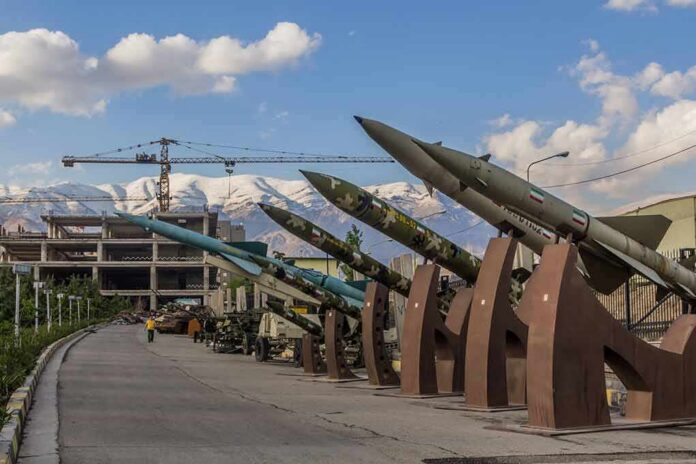
Force size is only half the story; what matters is how those warheads can be delivered. North Korea has spent the past decade fielding and testing systems that give it nuclear reach across multiple domains. On the strategic side, it has demonstrated ICBMs such as the Hwasong-15, capable in principle of reaching anywhere in the continental United States. Regionally, it has deployed a spectrum of short- and medium-range ballistic missiles and, more recently, large-caliber multiple rocket launchers KCNA describes as nuclear-capable; Euronews, citing North Korean statements, reports tests of 600mm rocket launchers able to carry the Hwasan-31 nuclear warhead.
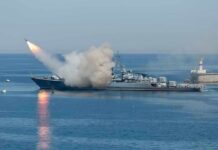
The naval domain is catching up. North Korea has unveiled ballistic missile submarines and, according to social media and broadcast reporting, launched a 5,000-ton multi-purpose destroyer, the Sohyang, described as capable of deploying nuclear weapons and accompanied by plans for additional nuclear-capable surface ships. While external verification of specific platforms varies, the pattern is clear: Pyongyang aims for delivery options from land-based mobile launchers to submarines and surface combatants, complicating adversary defense and enhancing survivability.
Kim’s pledge to equip the navy with nuclear weapons, reiterated in party meetings and covered by outlets such as CBS and PBS, fits into a broader push to standardize and modernize military bases and intelligence systems while “strengthen[ing] the nuclear force both in quality and quantity.” A 300–500 warhead arsenal would not sit unused; it would be designed to populate this diversified force structure, backing deterrent threats with credible warfighting capacity.
Opacity, Estimate Inflation, and the Danger of Numbers
Despite the strong evidence of expansionary intent and growing capacity, the precise figure of 300–500 warheads remains more analytical construct than empirical fact. No publicly available DPRK planning document, budget, or order of battle specifies a warhead quota, fissile-material target, or inventory objective in this range. Estimates of current stockpile size and future growth vary widely, from roughly 35–65 weapons to claims of 150 today and more than 400 by 2040.
This spread reflects structural opacity. North Korea does not publish defense white papers or budget breakdowns; inspectors are barred; sanctions and geography limit physical access. Analysts must infer from indirect signatures—reactor operation patterns, construction at enrichment facilities, test activity, and leadership rhetoric. Under such conditions, there is a strong temptation to compress uncertainty into a single headline number, often leaning toward worst-case assumptions. Once a figure like “300 warheads by 2035” enters public discourse, it can become sticky, repeated in media and policy debates even if its derivation rests on layered assumptions.
None of this means the high-end projections are irresponsible. Given Kim’s declared desire for “exponential” expansion and the observed build-out of nuclear infrastructure, a trajectory into the low hundreds is technically plausible and strategically consistent with his aims. But the responsible way to talk about “Kim’s arithmetic” is to treat 300–500 warheads as a range of plausible outcomes under continued expansion, not as a verified program goal. The evidence supports a confident claim that North Korea is building a larger, more versatile nuclear force; it supports a cautious, contingent claim about exactly how large that force will be.
Strategic Implications for the Region and Beyond
Whether North Korea ends up with 150, 300, or 500 warheads, the strategic consequences for Northeast Asia and the United States are profound. A significantly larger arsenal, especially one rich in tactical weapons, would complicate allied conventional war plans, stress missile defense architectures, and raise the risks of miscalculation in crises. It would also make denuclearization diplomacy—already moribund—effectively obsolete; once nuclear weapons are embedded in the constitution, political identity, and military planning, rolling them back becomes vastly harder.
At the same time, the logic of deterrence still applies. As long as Kim calculates that first use would invite regime-ending retaliation, he has strong incentives to wield his growing arsenal as a tool of coercion and insulation rather than outright aggression. The challenge for President Trump and allied leaders is therefore less about preventing the existence of North Korea’s nuclear weapons—which is no longer realistic—and more about managing a world in which Pyongyang possesses a large, diverse, and possibly 300-plus–warhead force anchored in a doctrine that mixes deterrence with options for limited, tactical use.
North Korea: "An attack on Tehran is a direct declaration of war against Pyongyang. We have readied our tactical nuclear warheads, and our fingers are on the trigger."
— The world in my eyes (@G_24deep) July 24, 2026
Sources:
19fortyfive.com, globalsecurity.org, euronews.com, armscontrol.org, koreaherald.com, tandfonline.com, scmp.com, en.wikipedia.org, congress.gov, fas.org, armscontrolcenter.org, bbc.com, voanews.com, thebulletin.org, understandingwar.org, ncnk.org, youtube.com, isis-online.org, recna.nagasaki-u.ac.jp, newsweek.com