
America’s Arctic leverage just ran into a coordinated show of force as Canada and France rushed diplomatic boots onto Greenland’s ground.
Story Snapshot
- Canada officially opened a new consulate in Nuuk on Feb. 6, 2026, after a weather delay, elevating its on-the-ground presence in the Arctic.
- France’s first consul general for Nuuk arrived the same day, marking the first EU consular presence in Greenland even before a permanent site is established.
- The openings land amid tensions tied to Trump’s push for stronger U.S. positioning in mineral-rich Greenland and his earlier tariff threats toward Denmark and parts of Europe.
- U.S., Danish, and Greenlandic officials have begun technical talks and formed a working group after a reported NATO-brokered “framework” on Arctic security access.
Canada Plants a Flag in Nuuk as Arctic Stakes Rise
Canadian Foreign Minister Anita Anand and Governor General Mary Simon formally opened Canada’s consulate in Nuuk, Greenland’s capital, with a flag-raising ceremony and anthem. Canadian officials said the opening had been planned previously and was delayed from November 2025 because of weather, but the timing still sends a clear message: Ottawa wants a direct role in the region as security and resource competition accelerates. Simon, who is of Inuit heritage, publicly emphasized support for Greenlanders.
France moved in alongside Canada. Jean-Noël Poirier arrived in Nuuk to begin work as France’s first consul general to Greenland—an EU first for the island—even though reporting indicates France has not yet established a full physical consulate site. French messaging has stressed cultural, scientific, and economic ties while reaffirming Denmark’s territorial integrity. The practical effect is the same either way: more allied diplomats in Nuuk, more coordination capacity, and more eyes on U.S. activity.
Watch;
https://www.youtube.com/watch?v=WoLmonGcVD8
Trump’s Pressure Campaign Shifted From Tariffs to Security Talks
The diplomatic surge follows a period of sharper U.S. pressure. In January 2026, Trump threatened tariffs—reported in the 10% to 25% range—on Denmark, France, and other European countries tied to U.S. demands about Greenland’s strategic future. Those tariff threats were later dropped after a reported NATO-brokered “framework” aimed at Arctic security access. Public details of that framework remain limited, leaving unanswered questions about what concessions, if any, were made.
Within that new track, the U.S., Denmark, and Greenland entered technical talks in early February, and a working group was formed after meetings involving Vice President JD Vance and Secretary of State Marco Rubio. Anand also met Denmark’s foreign minister, Lars Løkke Rasmussen, shortly before Canada’s opening ceremony. On paper, this is “allies coordinating.” In reality, it reflects how quickly Arctic policy can become a test of national sovereignty, alliance unity, and hard-power basing.
Why Greenland’s Location and Minerals Keep Pulling Major Powers North
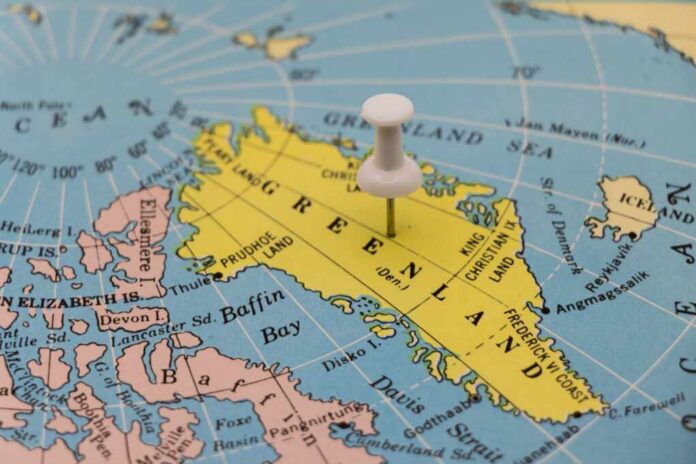
Greenland’s strategic value is not theoretical. Its Arctic position, its size, and its mineral potential are core reasons Washington has kept returning to the idea of deeper involvement there—an interest that stretches back decades and was revived again when Trump floated acquisition ideas in 2019. The U.S. closed its Nuuk consulate in 1953 and reopened it in 2020, underscoring that the Arctic is back in the center of great-power logistics and deterrence planning.
What the Consulate Rush Signals About Alliance Politics and Sovereignty
Canada and France framed their moves as support for Denmark and Greenland at a moment of heightened tension over America’s push for more control and access. From a conservative perspective focused on national interest and limited theatrics, the key question is whether “unity” becomes a tool to box Washington out of legitimate security requirements in the High North. The sources show allied officials stressing climate and cooperation, while U.S. officials stressed defense capacity and access.
Canada and France opening new consulates in Greenland's capital amid Trump pressure https://t.co/sVCqxKFHow #FoxNews
— Tom (@thmsm74) February 7, 2026
For Greenland itself, the public statements also leaned heavily on self-determination. That matters because every new consulate expands foreign influence networks—economic, cultural, scientific, and political—inside Nuuk. The reporting does not provide enough detail to measure how Greenland’s domestic politics will shift, but it does show competing priorities converging at once: U.S. strategic posture, Danish sovereignty, European visibility, and Canada’s Arctic leadership messaging. The next measurable indicator will be what the working group produces.
Sources:
Canada and France opening new consulates in Greenland’s capital amid Trump pressure
Canada, France open consulates in Greenland following tensions over U.S. push for control
Canada and France opening consulates in Greenland amid tensions over U.S. push