
President Trump revealed he is considering deploying a second aircraft carrier strike group to the Middle East as leverage against Iran, making clear that America’s days of empty threats are over.
Story Snapshot
- Trump confirms potential second carrier deployment to Gulf region if nuclear talks with Iran collapse
- President frames choice starkly: Iran accepts comprehensive deal on nukes and missiles or faces “decisive action”
- Military buildup follows June 2025 strikes that crippled Iranian nuclear sites and changed Tehran’s negotiating posture
- USS Abraham Lincoln strike group already positioned; jets recently downed Iranian drone demonstrating readiness
- Netanyahu pushing Trump for tougher stance while Iran signals willingness to negotiate under pressure
Trump’s Dual-Track Strategy Puts Iran on Notice
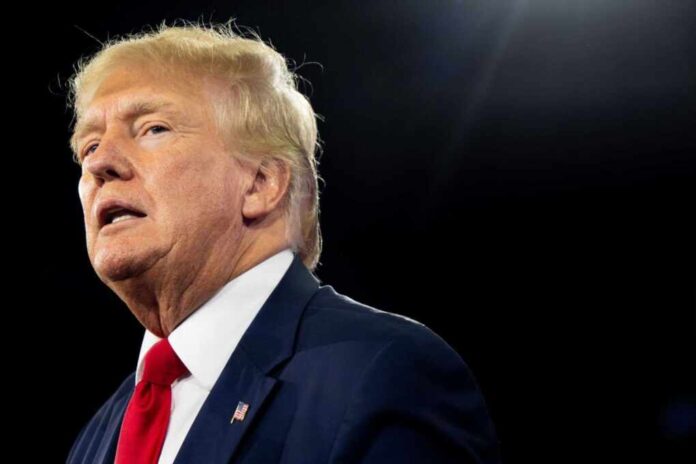
President Trump disclosed on February 10, 2026, during an interview with Axios that his administration is actively discussing deploying a second aircraft carrier strike group to the Middle East as contingency planning for potential military strikes against Iran. The revelation comes as U.S.-Iran negotiations resumed February 6 in Oman, the first diplomatic engagement since last June’s 12-day bombing campaign targeting Iranian nuclear facilities. Trump framed the choice bluntly: Iran can accept an “excellent agreement” addressing both nuclear weapons and missile arsenals, or face decisive military action. A U.S. official confirmed the carrier discussions are underway.
Watch:
https://www.youtube.com/watch?v=4ywj0zM30NA
Maximum Pressure Yields Changed Iranian Behavior
The renewed talks represent a significant shift from Iran’s previous intransigence. Five rounds of negotiations collapsed in 2025 over uranium enrichment disputes before Trump authorized strikes on Iranian nuclear sites during a 12-day U.S.-Israel conflict in June 2025. Since those strikes, Iran has reportedly halted enrichment activities that had reached 60 percent purity, dangerously close to the 90 percent weapons-grade threshold. Trump emphasized that Iran now “desperately wants” a deal specifically because of the military pressure applied through his resolve. This validates the conservative principle that strength, not appeasement, produces diplomatic breakthroughs with hostile regimes.
Military Buildup Demonstrates American Resolve
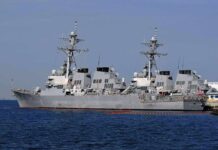
The USS Abraham Lincoln carrier strike group currently operates in the Gulf region, equipped with fighter jets, Tomahawk cruise missiles, and accompanying warships including the USS Delbert D. Black. One of the Lincoln’s jets recently shot down an Iranian drone, demonstrating operational readiness. Satellite imagery confirms a substantial surge of U.S. aircraft and military equipment throughout the region. Pentagon officials are evaluating three potential carriers for the second deployment: USS George Washington currently in Asia, USS George HW Bush on the East Coast, or USS Ford in the Caribbean, each requiring over one week transit time to reach the Gulf.
Netanyahu Lobbies for Tougher Iran Position
Israeli Prime Minister Benjamin Netanyahu arrived in Washington on February 11 for his seventh meeting with Trump since the President’s return to office. Netanyahu remains deeply skeptical that Iran will accept meaningful restrictions on its missile program, which Tehran has rebuilt and declared non-negotiable. The Israeli leader is pushing Trump to establish firm red lines on Iran’s ballistic missile capabilities, not just nuclear weapons. Meanwhile, Iranian advisor Ali Larijani warned the United States against allowing “Zionist” influence to derail negotiations. Larijani visited Oman on February 10 to discuss a “balanced” deal before traveling to Qatar for additional mediation efforts on February 11.
Trump told @axios he's considering sending a second aircraft carrier strike group to the Middle East to prepare for a military attack if negotiations with Iran fail: “Either we will make a deal or we will have to do something very tough like last time” https://t.co/shXbeGM5Xy
— Mohamad Bazzi (@BazziNYU) February 10, 2026
This escalating military presence reflects the type of peace-through-strength approach conservatives have long advocated. Trump’s willingness to deploy overwhelming force if necessary stands in stark contrast to the weak posturing of previous administrations that allowed Iran to advance its nuclear program unchecked. The current nimble deployment strategy allows for scalable military operations without the rigid buildups that constrained previous responses. Defense expert David Des Roches of the Thayer Marshall Institute notes that current force configurations are easier to adjust than massive sustained deployments. Trump’s approach protects American interests while giving diplomacy a genuine chance to succeed, backed by credible military consequences if Tehran refuses reasonable terms on both nuclear weapons and missile threats.
Sources:
Exclusive: Trump says he might send second carrier to strike Iran if talks fail – Axios
Trump Hints at Second Carrier in Middle East as Iran and US Near Talks – Asharq Al-Awsat
U.S. Military Deployment to Gulf Amid Iran Strike Concerns – Radio Free Europe/Radio Liberty