
When a president vows to trade every attacked ship for a destroyed bridge or power plant, he is not just threatening Iran’s infrastructure; he is testing the outer limits of modern deterrence and the law that governs war itself.
Key Points
- Trump’s “bridges and power plants for ships” ultimatum explicitly ties attacks on Iranian civilian infrastructure to reopening the Strait of Hormuz as a bargaining leverage, not only as retaliation.
- The threatened targets—electric grids, bridges, desalination plants—are widely characterized as civilian-essential infrastructure, triggering intense debate over potential war crimes.
- Administration allies argue some infrastructure is dual-use and may weaken Iran’s missile and nuclear programs, but they have not produced public, site-specific legal justification.
- International-law experts, NGOs, and U.N.-linked voices overwhelmingly treat the threats as unlawful collective punishment and a threat to commit war crimes.
- The episode exemplifies a broader shift: critical infrastructure has become a central tool of coercion in interstate conflict, while the law of armed conflict struggles to keep pace.
Trump’s Infrastructure Ultimatum: What Was Actually Threatened
Trump’s threats are unusually explicit, both in their targets and in their bargaining logic. Across statements, social posts, and interviews, he repeatedly pledged that if Iran did not reopen the Strait of Hormuz by a specified deadline, the United States would carry out a “complete demolition” of Iranian power plants and bridges, potentially within a single night and a four-hour bombing window. In some formulations, he expanded the target set to include oil infrastructure and desalination plants, warning that Iran would be bombed “back to the Stone Age” if it refused to comply.
CNN, Reuters, the BBC, and Council on Foreign Relations accounts converge on a core structure: Trump sets a deadline—often 8 p.m. Eastern on a Tuesday—for Tehran to agree to reopen the Strait for global energy transit, then couples that demand with an explicit threat to hit “each and every” electric-generating plant and decimate “every bridge in Iran” if the deadline passes. CFR summarizes the posture bluntly: power plants and bridges are threatened “Tuesday if Iran did not agree to reopen the Strait of Hormuz,” and Iranians are warned they will be “living in Hell” absent compliance.
Deterrence, Compellence, and the Logic of “One Bridge per Ship”
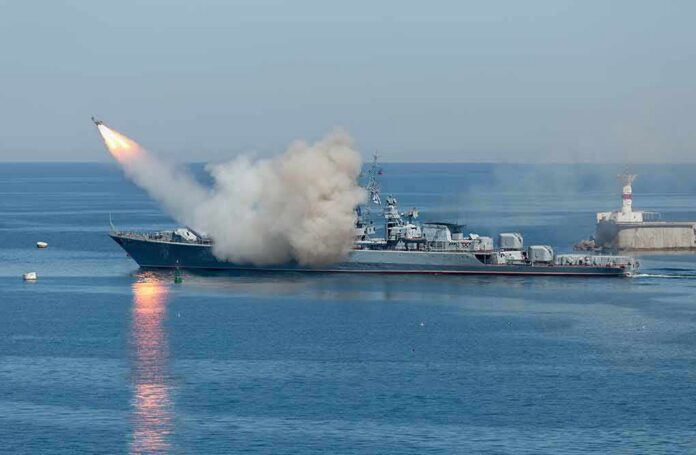
Strategically, these threats sit at the intersection of deterrence and compellence, the use of force to make an adversary change behavior rather than merely refrain from new aggression. The administration frames its approach as retaliation for Iranian attacks on shipping and regional targets, including strikes that killed U.S. service members and damaged tankers and oil flows. In that account, promising to hit infrastructure “many times over” for each American killed or ship attacked is meant to raise the cost of Iran’s conduct and prevent further escalation.
Yet the threats are tethered to a transactional demand: reopen the Strait of Hormuz or face destruction of civilian-essential infrastructure. CNN’s detailed timeline describes a sequence of deadlines and social posts in which Trump states that Iran must allow the free movement of goods and oil tankers through Hormuz or face bombing of power facilities and bridges. CFR’s reporting similarly emphasizes that the infrastructure ultimatum is explicitly tied to reopening the Strait, a bargaining move aimed at securing a specific political outcome rather than a narrow military response.
In classical deterrence theory, credible threats target military assets directly linked to the adversary’s aggression. Here, Trump is threatening assets that sustain civilian life and national economy, leveraged not only to stop attacks but to compel a negotiated reopening of a strategic waterway. That combination—civilian infrastructure used as bargaining collateral—marks a significant departure from the traditional deterrent script.
Civilian Infrastructure and the Law of Armed Conflict
International humanitarian law distinguishes sharply between military objectives—targets that by their nature, location, purpose, or use make an effective contribution to military action—and civilian objects, which cannot be attacked unless and until they become military objectives. Power plants, bridges, and desalination facilities sit squarely on this fault line. They can be dual-use, supporting military logistics and weapons programs; but they are also indispensable to civilian survival, particularly in arid regions such as Iran’s Gulf coast.
In the public record surrounding Trump’s threats, legal commentary is unusually direct. NPR explains that intentionally attacking civilian infrastructure can qualify as a war crime under international law, and notes that the U.S. War Crimes Act criminalizes such conduct under domestic law as well. Amnesty International, in a specific statement about Trump’s warning to attack Iran’s power plants, calls it a “threat to commit war crimes,” emphasizing that assaults on power plants and other objects indispensable to the civilian population are generally prohibited.
Over one hundred U.S. and international law experts signed an open letter reported by Al Jazeera and published by Just Security, arguing that strikes on power plants and similar infrastructure could violate the U.N. Charter and constitute war crimes, in part because such objects are protected when they are essential to civilian survival. The letter situates Trump’s infrastructure ultimatum within a broader critique of the legality of the Iran campaign, citing the lack of Security Council authorization and insufficient evidence of imminent threat.
U.N.-linked voices reinforce that assessment. PBS relays a representative of the U.N. Secretary-General cautioning that strikes on civilian infrastructure are prohibited under international law, and quotes Senator Chris Van Hollen stating that “if you aim at civilian infrastructure for the purposes the president described, it unequivocally qualifies as a war crime.” Another Amnesty statement describes Trump’s repeated threats against energy and transport infrastructure as “apocalyptic” and urges global action to prevent atrocity crimes.
The Administration’s Case: Dual-Use Targets and Military Utility
Against this legal barrage, the administration and its allies offer a narrower, largely anonymous rationale. CFR cites Wall Street Journal reporting that unnamed U.S. officials view certain Iranian infrastructure facilities as legitimate military targets because striking them could weaken missile and nuclear programs. Within this frame, power plants and transport networks are part of the backbone that enables Iran’s military-industrial complex; disrupting them is presented as a way to degrade military capacity without directly targeting civilians.
There is some plausibility to the dual-use claim. Modern missile production, uranium enrichment, and command-and-control systems are energy-intensive and depend on reliable electricity and transport. Destroying select nodes could, in principle, slow or complicate Iran’s weapons programs. Military lawyers regularly grapple with such cases—bridges used to move troops, power plants dedicated to arms factories, communications hubs with both civilian and military traffic—and international law does not categorically prohibit attacking dual-use objects.
The evidentiary problem is that, in the public record, this rationale is asserted at a very high level of generality. The administration has not released target folders, site-specific legal reviews, or Office of Legal Counsel memoranda demonstrating that the particular bridges, plants, or desalination facilities threatened meet the legal test of military objective and that expected civilian harm would be proportionate to the concrete and direct military advantage anticipated. Without that granular analysis, the dual-use justification remains an unverified claim, while detailed NGO and expert critiques treat the targets as civilian-essential.
Collective Punishment and Coercive Bargaining
The linkage between infrastructure strikes and a political demand—reopening Hormuz—has a distinct legal and moral consequence. Al Jazeera’s reporting quotes international law scholar Yusra Suedi describing Trump’s threats as “undoubtedly an act of collective punishment,” forbidden under the Fourth Geneva Convention. Collective penalties and intimidation measures directed at a civilian population to pressure its government are expressly prohibited; using the prospect of widespread infrastructure devastation to compel a state to change policy fits that description uncomfortably well.
Amnesty and other commentators stress that Trump is not threatening discrete, battlefield-adjacent facilities, but “complete demolition” of the national grid and transport system, with language about bombing Iran “back to the Stone Age.” That rhetoric suggests large-scale civilian deprivation—water, electricity, mobility—as the lever of coercion. In legal terms, the combination of scale, indiscriminate impact, and bargaining purpose reinforces the case that this is punitive compellence against a population, not narrowly tailored military necessity.
Effectiveness: Does Infrastructure Threaten Successfully Deter Shipping Attacks?
Strategically, the key question is whether such threats work. The available reporting documents repeated ultimatums, continuing Iranian attacks, and escalating reprisals, but not clear evidence that threatening “one bridge or power plant for every attack on ships” has produced durable deterrence. Fox News and NBC describe ongoing Iranian strikes on tankers, missiles fired at bases, and expanded attacks on Gulf states even as U.S. infrastructure threats intensify and actual U.S. strikes hit bridges and ports.
Analysts quoted by Al Jazeera argue that beyond legality, civilian infrastructure attacks are unlikely to help Trump achieve his objectives, especially reopening Hormuz. They point out that such strikes can harden the adversary’s resolve, rally domestic and international sympathy, and prompt retaliatory targeting of U.S. and allied infrastructure. A University of New Hampshire analysis on the effects of infrastructure targeting in the Iran war reaches a similar caution: targeting civilian infrastructure is not permissible absent compelling military necessity, and even when legally arguable, it can have profound humanitarian and political blowback.
In other words, even on purely instrumental grounds, large-scale infrastructure compellence is a high-risk bet. It may degrade Iran’s capacity in the short term, but it also risks escalating the conflict, undermining international support, and creating long-term hostility that complicates any negotiated settlement.
Patterns Beyond Iran: Infrastructure as a 21st-Century Battlespace
Trump’s ultimatum fits a broader trend in contemporary conflict. States increasingly reach for critical infrastructure—electric grids, transport hubs, communications networks, water systems—as a lever to impose costs without committing ground forces. Reporting and analysis on the Iran campaign note that both the U.S. and Iran have targeted each other’s infrastructure while claiming defensive motives: Iran has struck desalination plants and power facilities in Gulf states, while the U.S. has hit bridges and surveillance towers tied to maritime operations.
International legal practice is struggling to keep pace. Al Jazeera’s broader survey of “civilian sites” in the Iran war underscores how often both sides invoke dual-use status to justify attacks while humanitarian law insists on strict distinction and proportionality. The law’s core principles have not changed; what has evolved is the battlefield, where almost every significant node has some connection to both civilian and military functions.
Trump’s “bridge or power plant for every ship” formula is therefore a case study in a larger problem: when infrastructure becomes both a weapon and a bargaining chip, and when leaders speak openly about leveraging civilian deprivation to achieve political goals, the boundary between lawful military pressure and prohibited collective punishment is tested in plain sight.
💥🚨Britain's Foreign Office withdrew embassy staff from Iran due to the ongoing security situation. President Trump warned that "any time the Islamic Republic of Iran shoots at a ship in the Strait of Hormuz, whether it be by Missile, Rocket, Drone, or any other device or… pic.twitter.com/U0Qs1TBUcL
— LN24 INT'L (@ln24_intl) July 23, 2026
What Evidence Is Missing—and Why It Matters
The public record is rich in presidential rhetoric, media framing, and normative condemnation. It is thin where legal determination truly lives: in detailed, site-specific analysis of military use, expected civilian impacts, and proportionality. Neither side of the debate has produced open-source targeting dossiers that map each threatened bridge or power plant to concrete military functions, nor have courts or tribunals yet ruled on the lawfulness of these particular threatened strikes.
For policymakers and citizens, that evidentiary gap has consequences. It means the legality of Trump’s threats cannot be definitively adjudicated here; but it also means that, in the absence of transparent justification, the normative field is dominated by those who see the threats as war-crime-adjacent collective punishment. In practice, reputation and alliance politics often respond to the narrative, not to undisclosed internal memos.
As future conflicts increasingly involve infrastructure compellence, two requirements become clear. First, governments that claim military necessity for dual-use targets will need to put more of their legal reasoning on the public record if they wish to maintain credibility. Second, legal and humanitarian institutions will have to refine how distinction and proportionality apply when “one bridge per ship” or “one power plant per missile” becomes a guiding political slogan. The Iran infrastructure crisis is not just about one president’s threats; it is an early, harsh test of how the international order handles coercion in an age where civilian life and military power share the same circuitry.
Sources:
pjmedia.com, reuters.com, cnn.com, aljazeera.com, theguardian.com, npr.org, youtube.com, cfr.org, cbsnews.com, ktvq.com, ikhrw.com, iranpress.com, aklagare.se, rozenberg.substack.com, unh.edu, newsbreak.com