
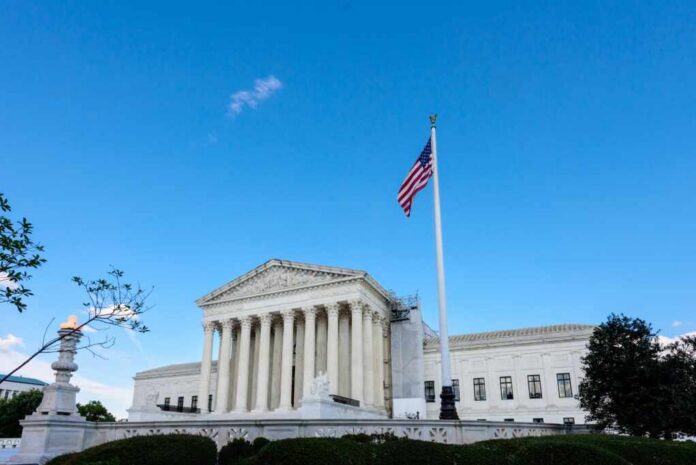
The Supreme Court will decide whether Colorado can force Catholic preschools to choose between their religious convictions and taxpayer funding, a case that could reshape the relationship between faith-based institutions and government programs nationwide.
Story Snapshot
- Supreme Court agreed April 20, 2026, to hear Catholic preschools’ challenge to Colorado’s Universal Preschool Program nondiscrimination requirements
- Catholic institutions argue the state law forces them to violate teachings on marriage and sexuality or forfeit public funding
- Colorado defends the policy as ensuring all families, including same-sex couples, have equal access to participating preschools
- Trump administration filed brief supporting the Catholic plaintiffs, arguing the state penalizes religious adherence
- Ruling could impact religious organizations nationwide that participate in government-funded programs while maintaining faith-based standards
Catholic Preschools Challenge State Funding
St. Mary Catholic Parish preschools, their parishes, the Archdiocese of Denver, and parents filed suit in 2023 against Colorado officials over the state’s Universal Preschool Program enacted in 2022. The program offers free preschool funded by state taxes but requires participating providers to enroll children without discrimination based on sexual orientation, gender identity, race, income, or disability. The Catholic institutions sought to participate but refused to implement enrollment policies conflicting with their teachings that marriage exists between one man and one woman. They argue this creates an unconstitutional choice between maintaining their religious identity and accessing public benefits available to secular providers.
Lower Courts Side with Colorado
Federal district court ruled for Colorado in June 2024, finding the law neutral and generally applicable under the Supreme Court’s 1990 Employment Division v. Smith precedent. The U.S. Court of Appeals for the 10th Circuit unanimously upheld that decision in September 2025, determining the law contained no categorical exemptions based on sexual orientation or gender identity that would violate the Free Exercise Clause. The plaintiffs then petitioned the Supreme Court, arguing that various exemptions for low-income families, disabilities, and affinity groups like “children of color” or the “LGBTQ community” demonstrate the law is not truly neutral or generally applicable, making it unconstitutional as applied to religious institutions.
Religious Liberty Meets Nondiscrimination Policy
The case represents the latest clash between religious freedom protections and LGBTQ+ nondiscrimination policies, an ongoing tension since the 2015 Obergefell marriage decision and Colorado’s 2018 Masterpiece Cakeshop dispute. Unlike previous cases involving wedding vendors who declined services based on conscience, this dispute centers on preschool enrollment of young children based on their parents’ characteristics. Colorado maintains the program welcomes religious providers while ensuring same-sex parents can access their preferred preschools without facing protected-class discrimination. State officials argue participating institutions need not surrender their religious curriculum or character, only their ability to categorically exclude families based on sexual orientation or gender identity.
Trump Administration Backs Religious Plaintiffs
Solicitor General D. John Sauer filed an amicus brief on behalf of the Trump administration supporting the Catholic institutions, arguing the 10th Circuit ruling effectively penalizes their preference for enrolling families aligned with Catholic teachings. The administration’s position reflects broader conservative concerns that government programs increasingly force religious organizations to abandon core doctrines as a condition of equal treatment. The plaintiffs claim the law creates “intractable conflicts” by requiring them to admit children from family structures they believe contradict fundamental religious principles. Colorado counters that no exemptions exist allowing categorical exclusions based on the contested characteristics, and any “catchall” provisions serve limited purposes unrelated to enabling discrimination against same-sex families.
National Implications for Faith-Based Services
Legal analysts note the Supreme Court’s decision could affect religious schools, charities, foster care agencies, and adoption services nationwide that participate in government-funded programs while maintaining faith-based eligibility standards. The Court limited its review to whether Colorado’s law violates the Free Exercise Clause, explicitly declining to reconsider the Smith precedent that allows neutral laws of general applicability despite religious burdens. However, the case could narrow Smith’s reach by requiring stricter neutrality when laws contain any exemptions, potentially forcing states to choose between creating no exceptions or granting broader religious accommodations. With a conservative majority that has recently ruled for religious plaintiffs in funding disputes, observers expect heightened scrutiny of whether Colorado’s exemptions favor secular preferences over religious convictions.
Case Moves to Supreme Court Arguments
The case, docketed as St. Mary Catholic Parish v. Roy, will be heard during the Court’s next term beginning October 2026, with merits briefing and oral arguments pending. For Catholic families and schools, a favorable ruling could open access to Universal Preschool Program subsidies while preserving enrollment policies consistent with church teachings. Same-sex families risk losing access to certain faith-based preschools if institutions gain religious exemptions from nondiscrimination requirements. All Colorado parents may see altered preschool options depending on how the Court balances religious freedom against the state’s interest in ensuring universal, nondiscrimination access to taxpayer-funded early education. The decision will test whether government can condition public benefits on compliance with policies that religious institutions view as violations of their core beliefs.
Sources:
US Supreme Court to hear religious freedom challenge to Colorado preschool funding law – JURIST
Supreme Court to hear Colorado preschool case – CBS News
Supreme Court takes up religious freedom case from Colorado preschools – Courthouse News