
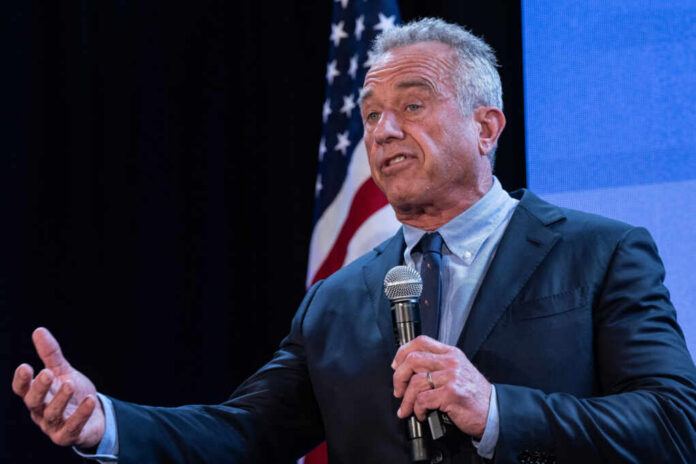
Health Secretary Robert F. Kennedy Jr. has launched a federal campaign to reduce antidepressant use across America, directing government agencies to study unproven links between psychiatric medications and mass violence while training doctors to “de-prescribe” drugs taken by millions of Americans.
Story Snapshot
- RFK Jr.’s MAHA initiative targets SSRIs through CDC/NIH studies on violence links and Medicare de-prescribing programs
- Medical experts unanimously reject claims connecting antidepressants to mass shootings, warning the campaign will cost lives
- Critics highlight that 82.7% of therapists don’t accept Medicare, making proposed alternatives unaffordable for most patients
- History shows similar 2004 warnings reduced youth prescriptions by 20-30% and correlated with thousands of additional suicides
Federal Push to Curb Antidepressant Prescriptions
Robert F. Kennedy Jr., serving as Secretary of Health and Human Services under President Trump’s second term, announced in May 2026 a clinician training program aimed at reducing antidepressant prescriptions for Medicare patients. The initiative prioritizes non-pharmaceutical interventions like diet, exercise, and therapy over medications that currently treat approximately 13% of American adults. Kennedy’s MAHA Commission, established through Executive Order 14212 in February 2025, formally designated psychiatric medications as potential “threats” to children’s health, escalating rhetoric into official government policy that directs the CDC and NIH to investigate correlations between SSRIs and mass violence.
Disputed Claims on Violence and Addiction
Kennedy intensified his campaign following an August 2025 Minnesota school shooting, asserting on Fox News that SSRIs require investigation for violence links and later comparing SSRI withdrawal to heroin addiction during his January 2026 confirmation hearing. Leading psychiatrists universally dispute these claims. Dr. Ragy Girgis of Columbia Psychiatry explained that any correlation between depression medications and violence reflects the underlying severe depression itself, not causation by the drugs. The American Psychiatric Association and California State Association of Psychiatrists issued formal rebuttals, emphasizing decades of research show SSRIs as safe and effective treatments with no established connection to mass violence, contradicting Kennedy’s central premise.
Access Barriers Undermine Proposed Alternatives
Advocacy group Protect Our Care condemned the de-prescribing initiative as “impractical,” noting that 82.7% of therapists do not accept Medicare, rendering talk therapy financially inaccessible for millions Kennedy seeks to transition off medications. The criticism arrives as the Trump administration pursues HHS budget reductions, creating a funding contradiction where alternatives require expanded access that proposed cuts would eliminate. One-third of psychologists currently operate outside insurance networks entirely, forcing patients into therapy waitlists or unaffordable out-of-pocket costs exceeding $200 per session. This infrastructure gap exposes a fundamental flaw: Kennedy’s plan steers patients toward resources that don’t exist at scale, particularly for Medicare recipients and rural populations already facing provider shortages.
Historical Precedent Raises Suicide Concerns
Medical experts warn Kennedy’s rhetoric mirrors the 2004 FDA black-box warnings that reduced youth SSRI prescriptions by 20-30% and preceded thousands of additional suicides with no measurable reduction in violence. STAT News documented this outcome in January 2026 coverage warning of an impending “war on antidepressants,” noting that stigmatizing effective treatments historically discourages patients from seeking help. Congressional representatives, including Rep. Balint who authored a March 2025 letter opposing the MAHA Commission’s approach, argue the initiative abandons evidence-based medicine. The parallel to Kennedy’s prior vaccine skepticism concerns critics who see a pattern of elevating personal beliefs over scientific consensus, potentially repeating past policy failures that cost lives while pursuing unsubstantiated theories about pharmaceutical harm.
Sources:
RFK Jr. linking antidepressants to mass violence – The Week
Letter to Secretary Kennedy on Antidepressants and MAHA Commission – Rep. Balint
Anxiety treatment SSRI medications and RFK Jr. – CBS News
RFK Jr.’s Anti-Antidepressant Campaign Has a Trump Budget and Access Problem – Protect Our Care
RFK Jr., antidepressants, teenagers, and warnings – STAT News