

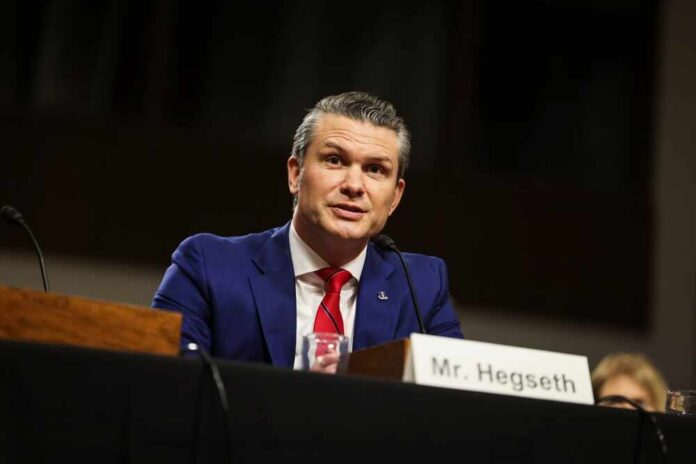
A sitting U.S. senator is now facing a Pentagon legal review over comments he made on national TV about a classified briefing—raising a fresh test of whether Washington’s accountability rules apply equally to the powerful.
Quick Take
- Defense Secretary Pete Hegseth says the Pentagon will review whether Sen. Mark Kelly’s public remarks about U.S. weapons stockpiles crossed a classified line.
- The dispute escalates a months-long feud tied to a 2025 video in which Kelly and other Democrats urged troops to refuse “illegal orders.”
- Because Kelly is a retired Navy captain, the Pentagon is also weighing actions that could affect his retired rank and pension.
- Courts have shown skepticism toward parts of the administration’s earlier effort to punish Kelly, keeping the due-process question front and center.
Pentagon opens a new review after Kelly’s TV comments
Defense Secretary Pete Hegseth said the Pentagon’s legal counsel will review Sen. Mark Kelly (D-Ariz.) after Kelly discussed a classified Pentagon briefing while speaking on CBS’s Face the Nation. Kelly described being “shocked” by how deeply the United States has drawn from its “magazines,” a phrase commonly understood as weapons stockpiles, in the context of the Iran war. Hegseth accused Kelly of “blabbing” classified information and framed the issue as a potential oath problem.
The central factual dispute is straightforward but consequential: Kelly’s comment was broad, but it was made after a classified briefing and appeared to characterize U.S. readiness. Hegseth’s position is that even generalized disclosures can undermine operational security when they confirm sensitive assessments. Kelly’s position is that he is speaking as an elected official about national preparedness and oversight. As of May 11, 2026, the review is ongoing and no formal finding has been announced.
Why Kelly’s retired status changes the stakes
Kelly is not only a senator; he is also a retired Navy captain, and that dual status is why the Pentagon has more leverage than it would with a typical lawmaker. Reporting indicates the Pentagon has initiated steps that include censure and a “retirement grade” determination process that could lower his retired rank and reduce pay. The Department of Defense has said any review will involve due process and impartiality, but it has provided few details while the process remains active.
The administration’s broader argument is about discipline and deterrence: if classified briefings can be discussed casually on television, officials who receive sensitive information may feel freer to signal weakness to adversaries. Conservatives who have watched years of politically convenient leaks often argue that Washington’s elite class rarely faces consequences. Still, the available reporting does not establish that Kelly disclosed specific classified data, only that the Pentagon believes the circumstances warrant a legal review.
The feud traces back to “illegal orders” messaging and civil-military trust
The current flashpoint builds on a separate controversy from November 2025, when Kelly appeared in a video with other Democratic lawmakers—many with military or intelligence backgrounds—urging service members to refuse “illegal orders” and uphold their oaths. The Pentagon had already been reviewing that episode, and the Justice Department was also reported to be looking into aspects of it. Hegseth has characterized the pattern as reckless and potentially “seditious,” while Kelly calls the scrutiny retaliatory.
The underlying policy tension is one many Americans share, left and right: trust in institutions is collapsing, and national security decisions are increasingly filtered through partisan combat. Conservatives tend to see the “illegal orders” messaging as an attempt to sow insubordination inside the chain of command. Liberals tend to see it as whistleblowing against perceived abuse. The reporting reviewed here shows accusations and counteraccusations, but it does not yet show a final adjudication on either track.
What the courts and Congress could do next
A key guardrail in this dispute is the judiciary. Recent reporting notes the D.C. Circuit heard arguments and showed skepticism toward the administration’s earlier attempt to punish Kelly, signaling that the legal limits of post-retirement military jurisdiction and First Amendment protections will matter. That skepticism does not resolve the new “classified briefing” question, but it suggests the Pentagon may face scrutiny if actions appear overly political or procedurally thin.
For Congress, the case raises a hard question that cuts across ideology: should retired military officers serving in public office be subject to disciplinary tools that can be triggered by political speech, and if so, under what standard? If the Pentagon finds an actual breach of classified rules, accountability will look justified to many Americans tired of double standards. If it cannot, the episode could deepen fears that the federal machine is being used to punish dissent rather than protect the country.
Sources:
Hegseth Defense Department Mark Kelly demotion unlawful orders
Hegseth censure Kelly unlawful orders
Pentagon launching review of Democratic Sen. Mark Kelly