
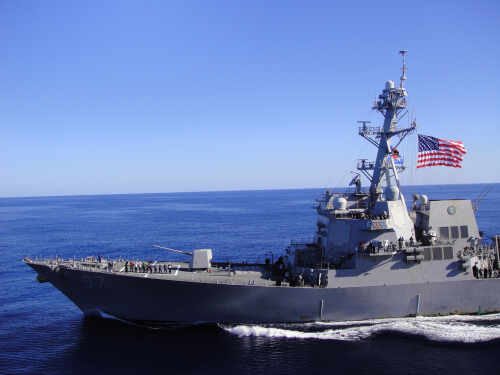
After six hours of warnings, a U.S. destroyer reportedly fired into an Iranian cargo ship’s engine room—and Marines then boarded and seized it near the world’s most important oil choke point.
Quick Take
- President Trump said U.S. Marines seized the Iranian-flagged MV Touska after it tried to evade a U.S. naval blockade near the Strait of Hormuz on April 19, 2026.
- U.S. Central Command said the USS Spruance issued repeated warnings over roughly six hours before disabling the ship by firing into its engine room.
- The vessel was previously under U.S. Treasury sanctions, and Marines are inspecting its cargo while it remains in U.S. custody.
- Iran accused the U.S. of violating a ceasefire, while U.S. officials emphasized proportional, professional enforcement of the blockade.
What happened off Hormuz—and why the ship mattered
President Donald Trump announced April 19 that Marines with the 31st Marine Expeditionary Unit seized the Iranian-flagged cargo ship MV Touska after it attempted to breach a U.S. naval blockade near the Strait of Hormuz. Multiple reports note the ship’s name appears with variant spellings, but the sequence is consistent: U.S. forces issued warnings for hours, then disabled the vessel and boarded it. The ship is described as being under U.S. sanctions for prior illegal activity.
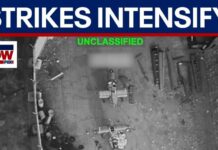
U.S. Central Command confirmed key operational details, describing an extended warning period and a targeted strike to stop the ship without escalating beyond what commanders deemed necessary. According to accounts of the incident, the Navy destroyer USS Spruance used its 5-inch Mark 45 gun to fire into the engine room, causing significant damage that left the ship dead in the water. Marines then boarded and took control, and the vessel remains in U.S. custody pending inspection.
The blockade backdrop: deterrence, sanctions, and a fragile ceasefire
The seizure comes amid a sharp rise in U.S.-Iran tensions following reported Iranian attacks on shipping around April 17 and the start of a U.S. naval blockade of Iranian ports last week. Reporting on U.S. preparations indicates the Marine Corps had been training for maritime raids—an operational hint that Washington anticipated the blockade might require boardings, not just radio warnings. Several accounts also describe a fragile ceasefire timeline that could expire soon, adding urgency to both sides’ decisions.
Geography is driving the stakes as much as politics. The Strait of Hormuz links the Persian Gulf to the Gulf of Oman and the Arabian Sea, and it remains a central artery for global energy trade. Any perceived instability there can ripple into shipping insurance costs, vessel routing decisions, and commodity prices. While the available reporting does not quantify market impacts from this single incident, it consistently frames the chokepoint risk as the larger economic pressure point hanging over the blockade.
Competing narratives: “proportional enforcement” vs. “ceasefire violation”
Two narratives are now colliding. Trump’s account highlights a sanctioned vessel defying repeated warnings and presents the boarding as a straightforward law-and-order interdiction at sea. Iran’s government, by contrast, accused the United States of violating a ceasefire after the ship was fired upon and disabled. Independent details about the ceasefire’s exact terms and enforcement mechanism were not established in the provided reporting, leaving the dispute largely dependent on official statements and competing strategic incentives.
What to watch next: cargo inspection, escalation risks, and Congress’s role
The immediate next step is the cargo inspection, because the legal and political meaning of the seizure will hinge on what Marines actually find onboard. Coverage suggests U.S. concerns center on illicit shipments—often framed broadly as oil, weapons, or proliferation-linked goods—yet no public inventory of the cargo has been confirmed in the materials provided. Until that inspection is publicly clarified, the strongest verified facts are the blockade enforcement action, the vessel’s sanctions status, and ongoing U.S. custody.
Politically, the episode lands in a familiar American frustration: major national-security actions are increasingly communicated via social media, while citizens across the spectrum suspect institutions are failing them at home. Republicans controlling Congress gives the administration more room to sustain enforcement, but it also raises expectations for clear oversight, defined objectives, and an exit ramp that doesn’t drift into open-ended conflict. With a ceasefire described as fragile, the next Iranian response—or the next attempted blockade breach—will shape whether this becomes a one-off interdiction or a new normal.
Sources:
Trump says U.S. Marines have seized Iranian ship and says it tried to evade blockade
US-Iran blockade: oil, weapons, Strait of Hormuz, Marine Corps maritime raids