
A familiar Ebola-era argument is resurfacing once again: health officials say travel controls and screening measures help reduce outbreak risks, while critics argue the public still rarely gets full visibility into how those decisions are actually made.
Story Snapshot
- India postponed the India-Africa Forum Summit after Ebola concerns made a large international gathering harder to manage safely [1][2].
- Officials said the decision followed public-health guidance and logistical worries tied to screening many delegates from across Africa [1].
- The record shows the summit was pushed to 2015, not canceled outright, which suggests a delay driven by outbreak management rather than diplomacy alone [1][3].
- The episode highlights a recurring tension: governments often prefer visible travel controls during outbreaks, even when the evidence for the exact restriction remains incomplete [1][4].
Why the Summit Was Pushed Back
India’s Ministry of External Affairs announced on Sept. 24, 2014 that it would postpone the India-Africa Forum Summit because of the Ebola outbreak and concerns about handling an unusually large international delegation safely.[1] The summit had originally been scheduled for Dec. 4 near New Delhi and was expected to bring together more than 1,000 delegates representing all 54 African Union countries, including presidents, prime ministers, ministers, business leaders, and journalists.[1] Government spokesperson Syed Akbaruddin said the postponement decision was made in consultation with African governments and that the summit would instead be rescheduled for 2015.[1]
The event ultimately went ahead the following year, reinforcing the view that the delay was tied primarily to outbreak management and logistical concerns rather than a collapse in diplomatic relations.[1][3] At the time, India had already implemented additional screening procedures at airports and ports of entry for travelers arriving from Ebola-affected regions. Officials were monitoring passengers displaying symptoms such as fever or severe weakness and tracking potentially exposed travelers for up to four weeks.[1] Those measures illustrate how governments during outbreaks often focus heavily on visible containment strategies designed to reassure the public while trying to reduce importation risks.
What the Record Shows About Ebola Travel Controls
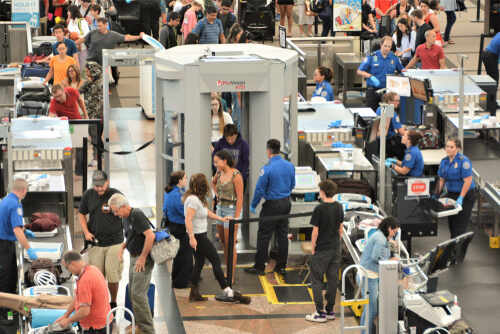
The broader Ebola response during that period relied heavily on layered screening systems, airport monitoring, and travel coordination between governments and international health agencies. Public health authorities, including the Centers for Disease Control and Prevention (CDC), repeatedly stated that their policies were based on evolving epidemiological evidence and ongoing risk assessments.[2] Earlier reporting also documented how U.S. officials concentrated entry screening at designated airports handling travelers arriving from Ebola-affected regions.[1][3] That approach reflected a broader strategy seen during multiple international outbreaks: rather than imposing complete travel shutdowns immediately, governments often relied first on targeted monitoring, screening, and coordination with airlines and border authorities.
At the same time, publicly available documentation rarely revealed every internal factor behind those decisions. The CDC publicly maintained that the immediate risk to the general American public remained low even while implementing travel-related restrictions and screening systems.[2] However, the public record available in many cases did not include the full internal risk models, threshold calculations, or policy deliberations that shaped those measures.[2][3] As a result, many people could see the policies themselves but not always the complete evidence or internal reasoning used to justify them.
Why the Debate Keeps Returning
Ebola policy tends to split audiences because it combines public health, border control, and international travel in one highly visible package. The scholarly article in the supplied record argues that unsanctioned travel restrictions are not supported by evidence and can interfere unnecessarily with international traffic and trade [4]. That critique does not erase the case for screening, but it does explain why some analysts question whether route restrictions and passport-based limits are tighter than the risk requires.
DHS to tighten Ebola-related flight restrictions for some foreign travelers: https://t.co/P1V8DZzhT7 pic.twitter.com/OU3hSKyUku
— Georgeanne Matranga ☮️🟧 (@DTPORGE) May 21, 2026
The broader lesson is not that governments should do nothing during outbreaks. It is that officials need to explain why a given measure is proportionate, what evidence supports it, and how it differs from a symbolic show of control. When agencies release only partial details, they invite suspicion from readers across the political spectrum who already believe powerful institutions often act faster to project authority than to prove effectiveness [1][2][4].
Sources:
[1] Web – DHS boosts screening for travelers from Ebola outbreak nations
[2] Web – CDC Statement on the Use of Public Health Travel Restrictions to …
[3] Web – United States | State Department, DHS and CDC announce actions …
[4] Web – Unsanctioned travel restrictions related to Ebola unravel the global …