
Thirty days into the Iran war, the most dangerous word for an exhausted American public isn’t “airstrikes”—it’s “ground.”
Quick Take
- The war that began Feb. 28 has stayed largely air-and-naval so far, but carrier and bomber deployments are fueling fears of a ground phase.
- Key public reporting does not confirm a Pentagon decision for ground operations, despite widespread commentary suggesting preparations.
- U.S. naval dominance has been emphasized by the administration, including claims Iran’s navy was “largely destroyed.”
- Strait of Hormuz threats and regional proxy escalation are driving energy anxiety at home and uncertainty abroad.
Day 30 Reality: Heavy Bombing, Naval Control, and Open Questions
Late March marks roughly the 30th day since the U.S. and Israel launched Operation Epic Fury on Feb. 28, initiating nearly 900 strikes according to widely circulated war timelines. Those strikes reportedly killed Iran’s Supreme Leader Ali Khamenei and hit military targets, triggering Iranian missile-and-drone retaliation described as Operation True Promise IV. By this stage, the best-sourced public picture still describes a campaign dominated by airpower and sea control—not confirmed U.S. ground combat.
Reporting and analysis also highlight a hard limit: there is no widely verified, official announcement that the Pentagon has approved ground operations inside Iran. The evidence being cited in public debate is indirect—force posture shifts, additional deployments, and operational tempo. For voters who backed Trump expecting fewer foreign entanglements, that ambiguity is the point of tension: Americans are being asked to trust that “preparing” will not become “invading” without clear, constitutional accountability.
Signals That Fuel Ground-War Talk: Carriers, Bombers, and Pressure Points
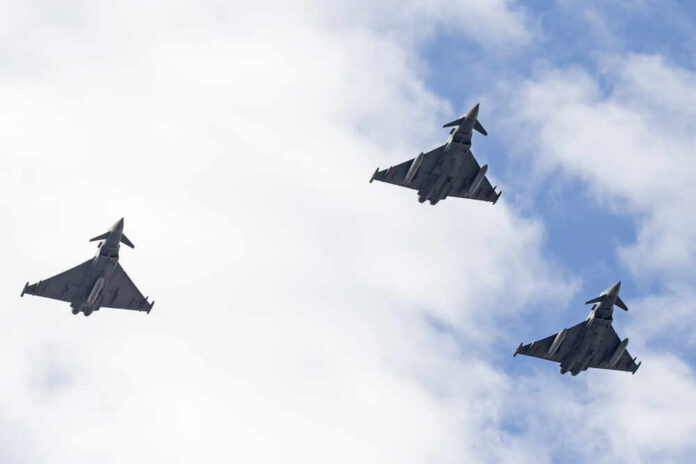
Public timelines of the conflict describe a third U.S. aircraft carrier deployment around March 7 and note bomber movements to the United Kingdom around March 11, alongside intensified strike messaging from senior officials. Analysts have treated these moves as potential enablers for a broader campaign, including the ability to sustain high sortie rates and hold more targets at risk. None of that proves an invasion plan, but it does explain why ground-war rumors persist.
Energy and shipping chokepoints keep dragging the American middle class into the strategic math. Iran has threatened disruption around the Strait of Hormuz, and the wider region faces pressure around other maritime corridors as proxies posture. Even without a full closure, the market reacts to risk, and voters feel it in household budgets. That’s why conservative frustration is boiling: Americans remember decades of “limited” missions that turned into open-ended commitments—plus the inflationary hit when energy policy meets war risk.
Regional Spillover: Proxies, Multi-Front Retaliation, and Civilian Costs
Iran’s asymmetric response relies heavily on affiliated groups, with reporting describing retaliatory actions and expanded fronts involving Hezbollah and other Iran-aligned forces. The conflict environment is not limited to Iran’s borders; it spreads across a region already destabilized by overlapping wars and political crises. This multi-front reality complicates any clean theory of victory because ground operations—if they occur—would not just face Iranian forces, but a wider network that can strike partners and bases.
Human costs are also central to the political debate. Public summaries cite more than 2,000 deaths across Iran, Lebanon, and Israel, with reports of severe civilian casualties in specific incidents. War planners talk about precision, but the fog of war is real, and every contested strike erodes trust and raises the stakes. Conservatives who prioritize moral clarity and national interest are left weighing two truths at once: Iran’s regime has a violent record, and war still punishes innocents and drains nations.
What Conservatives Should Watch: Mission Creep, War Powers, and End-State Clarity
The biggest question for constitutional-minded voters is not whether the U.S. can project power; it’s whether Washington will define an end-state and follow lawful constraints as the conflict evolves. The record so far supports a conclusion of U.S.-Israel air superiority and naval advantage, including assessments emphasizing U.S. dominance at sea early in the campaign. But the “ground operations” narrative remains less concrete in public sourcing, and that uncertainty is exactly where mission creep usually begins.
Iran War Enters 30th Day: Pentagon Prepares Ground Operations https://t.co/g7NdXooZ6g
— Norman Firebaugh (@FirebaughNorman) March 29, 2026
MAGA voters are also split along a familiar line: supporting American strength versus rejecting another open-ended Middle East war. With Israel tightly tied to the campaign and proxies widening the battlefield, the politics are no longer simple slogans. The most responsible demand from the right is basic and overdue—clear objectives, measurable benchmarks, transparent authorization, and an exit strategy that doesn’t quietly mutate into nation-building. Without those guardrails, “preparation” can become a permanent excuse.
Sources:
US-Israeli strikes kill Khamenei and Iranian retaliation …
2026 Iran War | Explained, United States, Israel, Strait of …
Supreme Leader of Iran Khamenei dead following Israel’s …
All about the US-Israel operation that killed Iran’s Khamenei