
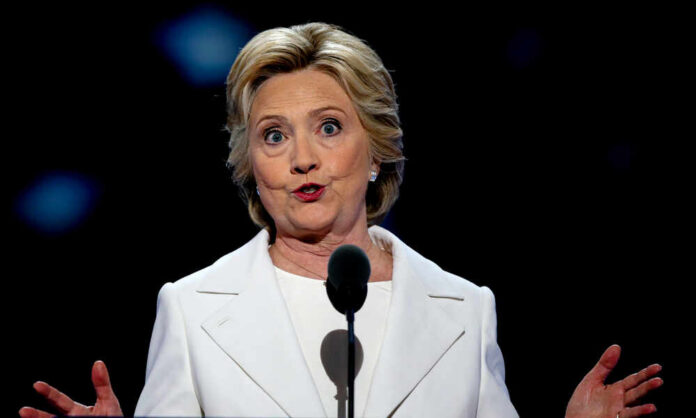
Hillary Clinton’s latest attack on Trump’s migrant child detentions is colliding with a paper trail from the Clinton years that’s harder to explain away than a viral talking point.
Quick Take
- Hillary Clinton cited data showing more than 6,200 migrant children detained under President Trump’s second term, calling it “terrible damage.”
- A DOJ inspector general report from the Clinton era documented thousands of unaccompanied juvenile detentions in FY 2000, with daily averages cited as higher than today’s figures.
- DHS pushed back by arguing its current approach does not “target” children and offers parents options while pursuing child-safety and anti-trafficking efforts.
- The political clash underscores a broader voter frustration: immigration enforcement swings with the party in power, but the system keeps producing the same humanitarian and governance failures.
What Hillary Clinton Said—and What the Data Points To
Hillary Clinton criticized the Trump administration on X over the detention of migrant children, pointing to Marshall Project data and saying the situation causes “terrible damage.” The figures cited in the reporting put the total at more than 6,200 children detained, averaging about 226 per day. That framing lands in a country still sensitive to images from prior border surges and previous administration missteps, especially when children are involved.
Fox News’ reporting highlighted a complication for Clinton’s argument: the federal government detained large numbers of unaccompanied minors during her husband’s administration as well. A DOJ Office of Inspector General report described 4,136 unaccompanied juveniles held longer than 72 hours in FY 2000, with daily averages described as roughly 400 to 500. The comparison doesn’t settle every question about conditions or legal standards, but it does challenge the idea that this is a uniquely “Trump” practice.
How 1990s Enforcement Laws Shaped Detention Practices
Bill Clinton signed major enforcement legislation in 1996 that expanded detention and removals, helping set the framework later administrations inherited. Those laws tightened the government’s posture toward illegal entry and removals, and they shaped how agencies handled custody decisions for non-citizens, including minors who arrived without a parent. The result is a throughline many voters miss: Washington built a tougher enforcement machine decades ago, then both parties used it while blaming the other for the outcomes.
That history matters because today’s debates often treat detention as a moral “tell” of which party is governing, rather than a consequence of a dysfunctional border and an overloaded processing system. Clinton has also argued publicly that more people were deported under her husband and under President Obama, without what she described as killings or “camps.” Even if deportation totals differ by era, the record shows detention did occur under prior Democratic administrations, complicating claims of purely partisan virtue.
DHS Response: “Not Targeting Children,” Plus Child-Safety Claims
The Department of Homeland Security responded to the Clinton critique by stating it does not target children and that its posture is consistent with past administrations. According to the reporting, DHS also emphasized options presented to parents, including removal together or placement decisions tied to sponsorship pathways. The administration further pointed to efforts to locate more than 145,000 unaccompanied children from the Biden era and to stop hundreds of thousands of alleged exploitations—claims offered as a child-protection rationale alongside enforcement.
Those statements are politically significant because they shift the argument from optics to operational responsibility: whether the federal government can enforce immigration law while maintaining credible child welfare safeguards. The research provided does not include independent documentation in this packet for every DHS figure referenced, so readers should treat the numbers as administration claims reported by media. Still, the broader point stands: enforcement without reliable tracking and oversight creates openings for trafficking, exploitation, and bureaucratic failure.
The Unresolved Lesson From 2018: Deterrence Can Produce Human Costs
America’s most searing modern reference point remains the Trump administration’s 2018 “zero tolerance” period, when family separations became a national scandal. Documentation and summaries cite thousands of separations and lasting trauma, including reports of grief and PTSD symptoms among children, while facilities struggled under volume and legal constraints. That episode continues to shape how the public evaluates any detention statistic today, even when the policy details differ from the separations model used in 2018.
For conservatives focused on sovereignty and rule of law, the lesson isn’t that enforcement is optional—it’s that the federal government must be capable, transparent, and consistent. For liberals focused on human rights, the lesson is that bureaucratic shortcuts and political deterrence strategies can harm children. In 2026, those concerns converge into a shared suspicion: leaders use emotional narratives to score points, while the underlying system stays broken and families—American and migrant alike—pay the price.
Why This Fight Resonates With Voters Who Feel the System Is Rigged
The political back-and-forth over child detention highlights a wider frustration among Americans across the spectrum: Washington often argues in absolutes while governing in cycles of crisis. When prominent figures attack today’s policies but sidestep yesterday’s record, trust erodes further. The available numbers in this research show that detention of minors has occurred under multiple administrations, while enforcement laws built by Congress and signed by presidents of both parties keep driving similar outcomes.
Hillary Clinton rips Trump on migrant child detentions, but Bill Clinton’s own record cuts deep: Over 6,200 children have been detained under Trump, but daily averages were far higher during the Clinton era https://t.co/5yXtovsgbF via @DollyWorld8 pic.twitter.com/dNFXr4Vurd
— Dolly_World (@dolly_note) April 17, 2026
That leaves the public with a practical question that neither party answers cleanly: how to secure the border, process asylum claims and removals, and protect children—without turning federal agencies into unaccountable systems that fail audits, lose track of people, and then blame political opponents. Until lawmakers address incentives that fuel illegal entry and improve custody transparency, each new outrage risks becoming another chapter in the same story: government failure dressed up as partisan righteousness.
Sources:
Hillary Clinton rips Trump on migrant child detentions, but Bill Clinton’s own record cuts deep
Trump administration family separation policy
Hillary Clinton Immigration Reform