
President Trump’s 10-to-15-day deadline for an Iran nuclear deal is forcing Tehran to choose between verifiable dismantlement and the real prospect of U.S. military strikes.
Quick Take
- U.S.-Iran nuclear talks are expected to resume this week, with reporting pointing to Thursday in Geneva.
- Trump said he is “considering” military strikes if Iran does not agree to a deal on a fast timeline.
- Iran’s foreign minister says Tehran will submit a proposal within days, but Iran rejects “zero enrichment” demands and rules out an interim deal.
- Reports describe elevated military readiness on both sides, underscoring how quickly a negotiating failure could escalate.
Trump’s deadline tightens the window for diplomacy
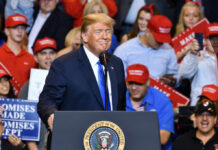
President Donald Trump set a 10-to-15-day timetable for progress in nuclear negotiations as U.S. and Iranian officials prepare for another round of talks expected this week in Geneva. Reporting indicates Iran plans to deliver a draft proposal within two to three days, framing it as the basis for “serious” discussions. The administration’s bottom line remains the core dispute: whether Iran must end enrichment entirely to prove it is not building a weapon.
Iranian officials publicly present the coming round as nuclear-only, pushing to keep missiles and regional proxy activity off the table. That narrow scope matters because it limits what any “deal” could realistically accomplish beyond the nuclear file, even if sanctions relief is part of the bargain. At the same time, the lack of an announced framework means the next meeting may hinge on whether Tehran’s proposal addresses facility dismantlement and what happens to stockpiled uranium.
Iran rejects interim steps and insists enrichment is a “right”
Iran’s foreign minister has ruled out an interim agreement, signaling Tehran wants a swift package that lifts sanctions rather than phased concessions. Iran also continues to reject a “zero enrichment” outcome, describing enrichment as a national right. That stance collides with Washington’s insistence that only zero enrichment can provide confidence Iran is not weaponizing. With both sides holding firm on first principles, the schedule itself becomes a pressure point rather than just a calendar.
Even basic facts remain contested in the public record. One report notes Iran’s claim that U.S. negotiators did not press a zero-enrichment demand in a recent Geneva session, while a U.S. official said the opposite. Those kinds of contradictions are not trivial; they determine whether talks are converging or simply being used to buy time. Limited public detail on the exact content of Iran’s forthcoming proposal leaves outside observers unable to verify whether Tehran is offering real dismantlement or rebranding old positions.
Military preparations raise the cost of stalling
Multiple reports describe heightened readiness alongside the diplomacy. Iran’s military has conducted inspections and readiness steps as the talks approach, while U.S. posture is portrayed as preparing credible strike options if negotiations fail. The research also references the USS Gerald R. Ford and the possibility of a prolonged campaign after deployment, though the available reporting does not provide complete clarity on timing. The strategic logic is straightforward: negotiations are occurring under the shadow of force, not separate from it.
For American voters who remember years of diplomatic drift and selective enforcement, the key distinction is conditionality. Trump’s deadline is explicit and tied to consequences, unlike open-ended processes that can allow adversaries to run out the clock. Still, the evidence in the current reporting supports one unavoidable caution: if Tehran’s approach is primarily to delay while maintaining core capabilities, the risk of escalation increases as deadlines approach and each side tests the other’s resolve.
What a deal would need to prove—and what remains uncertain
The practical dispute is not rhetorical; it is technical and verifiable. U.S. demands described in the research include dismantling key facilities and transferring or otherwise disposing of enriched uranium stockpiles, while Iran prefers to keep material inside the country. Until negotiators resolve where uranium goes, what infrastructure remains, and how compliance is monitored, claims of being “close” cannot be independently assessed. As of the latest updates cited, no final framework has been publicly confirmed.
Iran and the US are set to hold a new round of talks in Geneva, Switzerland, on Thursday. But West Asia continues to be on edge.
Military assets are being moved across the region, and proxy forces are mobilising. Even as Washington continues to expand its military footprint,… pic.twitter.com/hDnHW8vRgp
— WION (@WIONews) February 23, 2026
?s=20
Energy markets and regional stability hang in the balance because sanctions relief, oil exports, and shipping risks can change quickly if diplomacy breaks down. The research also notes concern about retaliation via missiles or proxies if strikes occur, a scenario that would expand the conflict beyond nuclear facilities. For U.S. interests, the constitutional and common-sense priority is clarity: any agreement must be enforceable, time-bound, and verifiable, rather than a political document that leaves Iran with advanced capabilities and ambiguous commitments.
Sources:
Iran Update, February 20, 2026
2025–2026 Iran–United States negotiations
Iran International report (February 23, 2026)