
When a single visit by Canada’s new prime minister is credited with “resetting” ties with India after an alleged state-linked killing on Canadian soil, it raises hard questions about how quickly governments move past justice when trade and geopolitics are on the line.
Story Snapshot
- India’s commerce minister Piyush Goyal says Prime Minister Mark Carney’s March trip “completely changed” India–Canada relations and set a rapid “reset” in motion.[2][3][4]
- Both governments are now chasing big trade goals, including plans to more than double or even triple two-way trade by 2030 and revive a comprehensive free trade agreement.[1][2]
- The diplomatic thaw follows the 2023 killing of Sikh activist Hardeep Singh Nijjar in British Columbia, which Canada linked to Indian government agents, sparking a major crisis.
- The reset illustrates how security and human-rights disputes can be sidelined once economic deals, energy supplies, and strategic alliances are back on the table.[1][2]
Goyal’s “very rapidly” reset and what changed after Carney’s visit
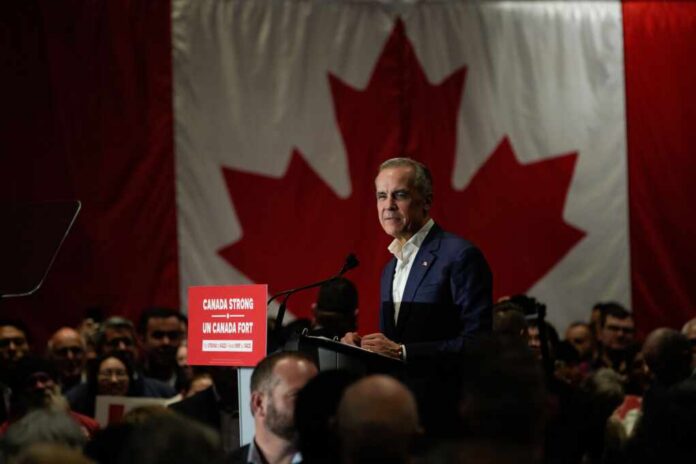
India’s commerce and industry minister Piyush Goyal is telling Canadian audiences that the India–Canada partnership is being “reset very, very rapidly,” and he ties that directly to Prime Minister Mark Carney’s four-day visit to India earlier this year.[2] Goyal says Carney’s trip, the first bilateral visit to India by a Canadian prime minister in eight years, “completely changed the way Canada and India looked at each other.”[2] He describes the visit as putting relations into “mission mode,” with new agendas, new goals, and visible intent on both sides to work together.[2]
Goyal’s current trade mission to Canada, with stops in Ottawa and Toronto and a large business delegation, is being framed as a follow‑through on that reset.[1][3][4] He is meeting Carney, Canada’s foreign minister, and corporate leaders, signaling that high‑level political and commercial channels are fully back in play.[4] In public remarks, Goyal emphasizes shared prosperity, business opportunities, and a “very ambitious target” for trade rather than the security dispute that froze talks in 2023.[2] The message is clear: both sides want to move fast toward normalized, business‑first relations.[2][3]
From diplomatic crisis to trade-first normalization
The backdrop to this sudden warmth is the still‑sensitive 2023 killing of Sikh activist Hardeep Singh Nijjar in British Columbia, which Canada publicly linked to agents of the Indian government, triggering expulsions, suspended trade talks, and a collapse in trust. That confrontation is not front and center in the new public narrative. Instead, both governments are highlighting a package of economic and strategic initiatives launched during Carney’s India visit, including a joint statement, five memorandums of understanding, and more than ten commercial agreements across energy, technology, and talent.[1]
Canadian and Indian officials now talk about “renewing and expanding” the partnership and “deepening ties” in trade, investment, and defence cooperation.[1][3] Targets are aggressive: Carney and Indian Prime Minister Narendra Modi endorsed plans to more than double two‑way trade to around 70 billion Canadian dollars by 2030, while Goyal cites a goal of tripling trade from roughly 17 billion United States dollars to 50 billion by 2030.[1][2] Negotiators have also been told to revive a comprehensive free trade agreement and move it toward completion “before the end of this year or earlier,” a dramatic timeline given how recently talks were frozen.[2]
Economic deals versus accountability and national security
This rapid reset follows a familiar pattern in international politics: when a relationship is damaged by a security or human‑rights dispute, leaders often reframe the conversation around trade, investment, and “win‑win” growth long before the underlying issues are fully addressed.[2] Official statements from Ottawa and New Delhi stress commercial opportunities, energy cooperation, and new institutional dialogues, while offering little evidence that the Nijjar case and broader security mistrust are resolved.[1] For citizens on both the left and right who already distrust political elites, that sequencing looks uncomfortably convenient.
Union Commerce and Industry Minister Piyush Goyal held high-level meetings in Ottawa with Canadian Prime Minister Mark Carney and senior ministers to strengthen India-Canada economic ties.
Discussions focused on accelerating negotiations for the Comprehensive Economic… pic.twitter.com/Fi53jn24x0
— DD News (@DDNewslive) May 26, 2026
Many conservatives will see a familiar story: national security concerns and the integrity of allied territory pushed aside as soon as big trade numbers and corporate deals are on the table. Many liberals will focus on the lack of visible accountability for an alleged extrajudicial killing, even as both governments advertise “shared values” and deeper defence cooperation. Across the spectrum, Americans watching this from afar can recognize a broader problem: governments talking tough about justice and sovereignty, then quietly prioritizing market access, energy flows, and geopolitical positioning when the cameras move on.
Sources:
[1] Web – Prime Minister Carney secures ambitious new partnership with India …
[2] YouTube – India Trade Mission Signals New Momentum in Canada Ties
[3] YouTube – India and Canada’s deepening ties
[4] YouTube – Canada PM Mark Carney Visit To India Aimed at Strengthening …