
The most striking thing about Donald Trump’s latest attempt to relitigate the 2020 election is not the drama of the primetime setting, but how decisively the underlying record—legal, statistical, and intelligence—fails to support his central claim that the election was “stolen.”
Key Points
- Trump’s primetime “receipts” speech and declassified documents did not show a single changed vote or outcome-altering fraud in 2020.
- Multiple audits, recounts, and more than 60 court cases have already tested and rejected the claim that the 2020 election was stolen.
- Intelligence assessments and the very documents Trump declassified state there is no evidence any foreign power altered voter registration, ballots, tabulation, or results in 2020.
- Statistical and legal analyses consistently find no systematic voter fraud, while documenting serious damage to public trust from persistent false claims.
- The White House’s briefing of election-denial activists and promotion of debunked narratives reflects a broader election denial movement, not new factual proof.
Trump’s “Receipts” Speech: What He Claimed, What He Produced
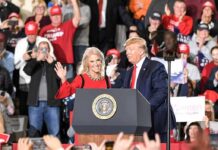
In his July primetime address from the White House, Trump promised “bombshell” proof that a foreign plot and massive vulnerabilities had stolen the 2020 election from him. He framed his declassification of intelligence documents as the unveiling of “shocking vulnerabilities” and implied that those vulnerabilities had been exploited to change the outcome. The central thrust was familiar: China supposedly carried out “the largest compromise of election data in history,” acquiring roughly 220 million U.S. voter files; Venezuela allegedly had capabilities to manipulate electronic voting systems; and noncitizens were claimed to be illegally registered on voter rolls in key states.
Yet when journalists, fact-checkers, and election experts went through the hundreds of pages of declassified material, a different picture emerged. The documents do acknowledge vulnerabilities—potential points where foreign actors could try to interfere, and known cases where they acquired or accessed voter data—but they do not show evidence that anyone succeeded in altering voter registration databases, casting ballots, changing tabulation, or flipping results in 2020. CNN’s document review found “no evidence that any foreign actor actually hacked voting machines or altered election results,” and emphasized that noncitizen registration estimates were plagued by false positives and did not demonstrate illegal voting. FactCheck.org’s analysis was blunt: Trump’s speech “cast doubt” on the ability to hold free and fair elections but “offered no evidence that widespread fraud had occurred.”
What the Intelligence Community Actually Found
The strongest counterweight to Trump’s narrative comes from the intelligence community’s own formal assessments. A 2021 U.S. intelligence report—drawing on agencies across the government—concluded there were “no indications that any foreign actor attempted to alter any technical aspect of the voting process in the 2020 US elections, including voter registration, casting ballots, vote tabulation, or reporting results.” That is a categorical statement: whatever foreign interest, propaganda, or data acquisition occurred, it did not translate into altering the mechanics of the vote.
The declassified documents Trump himself ordered released do not contradict that assessment. AFP’s review notes that these files say Venezuelan officials developed “sustained interest and likely some capability in manipulating electronic voting systems,” but explicitly acknowledge that intelligence “did not definitively confirm that large-scale electronic fraud was successfully executed in specific Venezuelan elections,” and that “neither Smartmatic nor the Venezuelan Government had the capability” to manipulate elections outside Venezuela. On China, several documents describe the acquisition of large volumes of U.S. voter data—some from hacking, much from publicly available files—but they do not show tampering with voter databases or the use of that data to change outcomes.
Crucially, even John Solomon—an ally brought into the White House and deeply involved in pushing these narratives—told reporters after Trump’s speech that “the intelligence community has zero evidence that a foreign power flipped a vote in 2020, ’22 or ’24.” When the president’s own chosen messenger concedes there is no evidence of flipped votes, the claim that he produced “receipts” of a stolen election collapses on its own terms.
Courts, Audits, and Recounts: Exhaustive Scrutiny, Consistent Results
By the time Trump delivered his primetime address, the 2020 election had already been subjected to extraordinary scrutiny. Independent analyses describe it as perhaps the most audited, litigated, and investigated election in modern U.S. history. Trump’s allies filed more than 60 lawsuits across multiple states, alleging everything from illegal ballots to systemic machine fraud. Those cases were heard by state and federal judges, including several appointed by Trump himself; they were overwhelmingly dismissed or rejected for lack of evidence.
One Third Circuit Court of Appeals ruling distilled the legal reality: “Charges require specific allegations and then proof. We have neither here.” A comprehensive review by the Campaign Legal Center concluded that “the various claims of evidence alleging a stolen 2020 election have been exhaustively investigated and litigated. Judges heard claims of illegal voting and found they were without merit.” Parallel efforts to validate or challenge results through audits and recounts—ranging from routine postelection canvasses to controversial partisan reviews—converged on the same finding.
A broad study of election audits published in PNAS found that the net error rate in counting presidential votes in 2020 was on the order of thousandths of a percent, shifting the national presidential vote count by about 0.007%—far too small to change any outcome. In other words, the machinery of counting votes performed with extremely high accuracy, and the corrections that audits did produce were marginal and symmetric, not indicative of concerted fraud.
Statistical Claims and the Myth of Systematic Voter Fraud
Beyond courtroom battles, Trump and his supporters have leaned heavily on statistical insinuations: supposed “impossible” turnout numbers, anomalous vote spikes, or patterns in suspicious counties. Those claims have been subjected to rigorous academic scrutiny. A widely cited 2022 study in the Proceedings of the National Academy of Sciences analyzed turnout patterns in counties flagged by fraud theorists and found “no evidence that turnout was unusually high in the suspicious counties, let alone that turnout was inflated in these counties by fraud.” A 2023 review in the Journal of Political Analytics dissected common statistical fallacies in “massive fraud” narratives, concluding that Trump’s claims were false and that he had been advised of that fact by his own experts and by the Justice Department.
The broader empirical literature on U.S. voter fraud is remarkably consistent. The Brennan Center’s long-running research on fraud finds that documented instances are exceedingly rare and sporadic, nowhere near the scale required to overturn a national election. A detailed Dartmouth study examining the impact of Trump’s fraud rhetoric underscores a different problem: while fraud itself is minimal, repeated claims of a stolen election have “corrosive effects” on trust in the election system. In short, when you look at the numbers rather than the slogans, systematic fraud isn’t what stands out; the erosion of confidence does.
Election Denial as Movement: Incentives and Strategy
The White House’s decision to brief a group of committed election deniers ahead of Trump’s speech is best understood inside the broader election denial movement rather than as a product of new evidence. MSNBC’s reporting describes a meeting with up to 25 activists, including Catherine Engelbrecht of True the Vote, whose “2000 Mules” film has been extensively debunked. This cohort has built influence and audience by asserting, often without credible proof, that elections are rigged against conservatives.
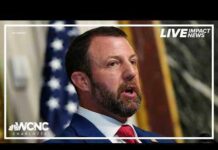
That movement now intersects with formal power. Trump has appointed figures such as Bill Pulte as acting Director of National Intelligence and Kash Patel in senior security roles—individuals known more for their political loyalty and public advocacy of fraud narratives than for traditional intelligence credentials. Homeland Security Secretary Markwayne Mullin has echoed Trump’s primetime claims and threatened aggressive measures against state election officials who resist federal demands for voter data. Together, these steps point to a strategy: use the language of “security” and “vulnerabilities” to justify expanded federal intervention into elections traditionally run by states, while continuously casting doubt on results that disfavor Trump or his allies.
Analysts on MS NOW and other outlets have warned that the current campaign is less about 2020, which is settled in practice, and more about shaping public perceptions of upcoming elections—2026, 2028, and beyond. The pattern is familiar: preserving a narrative of victimhood and “stolen” victories keeps a political base energized, provides a rationale for new legal and administrative maneuvers, and can be monetized through fundraising and media ventures. Whether the claims survive contact with evidence is, for these purposes, secondary.
You were duped fool.
Trump's whole charade Thursday night failed to make any case for election fraud. It was a WASTE OF TIME.
After all of the unsubstantiated or misleading statements he made, and even after the White House released a tranche of documents that supposedly backed…
— Eric Jay (@EricinAmericaX) July 20, 2026
Noncitizen Voting and Registration: Signal Versus Noise
One of the most eye-catching assertions in Trump’s speech was the claim that more than 250,000 non-U.S. citizens are illegally registered to vote in four states—California, Pennsylvania, New Jersey, and Nevada. That figure comes from a White House fact sheet, not from a completed, peer-reviewed investigation. Experts who examined the underlying methodology stressed that such estimates are highly sensitive to data quality and matching procedures; small error rates can yield large numbers of “possible noncitizens” who are actually citizens misclassified by imperfect databases.
When researchers look not at registrations but at confirmed instances of noncitizens casting ballots, the numbers shrink dramatically. Voting rights attorney Mark Elias, citing longitudinal studies from 1999 to 2023, noted that only 77 confirmed cases of noncitizen voting had been documented nationwide in that entire span, all investigated.[MS NOW compilation summary] Colorado’s Secretary of State Jenna Griswold described noncitizen voting as “extremely rare,” aligning with these findings. This does not mean registration systems are flawless, or that list maintenance requires no improvement. It does mean that using headline registration estimates to imply a quarter of a million illegal votes is not supported by the deeper evidence.
The Consequences: Trust, Law, and Democratic Resilience
When a sitting president insists that a past election was stolen and continues doing so in the face of contrary evidence from courts, audits, and his own intelligence services, the stakes extend beyond partisan combat. Empirical work increasingly shows that persistent fraud narratives depress trust in institutions, polarize attitudes about basic procedures, and can discourage participation among voters who come to believe the system is rigged. The Dartmouth study on Trump’s fraud claims explicitly ties such rhetoric to measurable declines in confidence in the election system.
On the legal front, Trump’s continued insistence on a stolen 2020 election is entangled with multiple criminal cases and investigations into efforts to overturn certified results. The “Lost, Not Stolen” report authored by conservative legal figures—including retired Republican-appointed judges—argues that respecting lawful outcomes is integral to the constitutional order and that efforts to deny or reverse those outcomes have already pushed the system to the brink. Intelligence assessments warning against politicization of raw data reflect similar concerns: when selective declassification is used to advance a preexisting political narrative rather than inform a sober public debate, both intelligence and democracy suffer.
The deeper lesson from the 2020 and 2026 cycles is that American elections are simultaneously more secure and more vulnerable than many citizens assume—secure in the mechanical sense that ballots are counted accurately and resistant to large-scale fraud, vulnerable in the civic sense that public belief in their legitimacy can be undermined by sustained campaigns of misinformation. Trump’s primetime “receipts” speech did not change the empirical record on fraud or foreign interference. What it did illustrate, once again, is how powerful claims can be when they appeal to grievance, even when the evidence points elsewhere.
Sources:
scribd.com, raskin.house.gov, reuters.com, pnas.org, nytimes.com, brennancenter.org, campaignlegal.org, tandfonline.com, law.stanford.edu, frontiersin.org, cpb-us-e1.wpmucdn.com, en.wikipedia.org