
The U.S. Navy wants to fire hypersonic missiles from shipping containers and new launch tubes — but a federal watchdog says the program is already nine months behind and years late on its original promises.
At a Glance
- The Navy plans to deploy its Conventional Prompt Strike hypersonic missile from new vertical launch systems and containerized launchers across more ships.
- The Government Accountability Office found CPS integration on the Zumwalt-class destroyer is nine months behind schedule due to testing and production problems.
- A joint Army-Navy test of the hypersonic missile succeeded in March 2026, but no operational deployment has happened yet.
- The Pentagon’s average weapons program now takes over 12 years to deliver — and hypersonic programs have been delayed every single time.
What the Navy Is Trying to Do
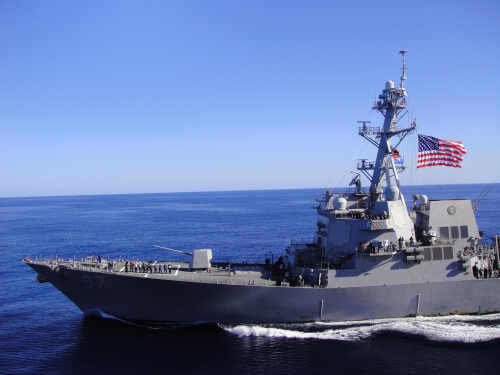
The Navy wants to put its Conventional Prompt Strike (CPS) hypersonic missile on more ships — and in more types of launchers. The current plan calls for deploying CPS on Zumwalt-class destroyers using large vertical launch tubes, then later on Virginia-class submarines. Now the Navy is also eyeing new containerized launchers that could let other ships carry hypersonic missiles without major redesigns. The goal is to spread this strike capability across the fleet fast.
CPS uses a weapon called the Common Hypersonic Glide Body. It rides a two-stage solid rocket booster into the upper atmosphere, then glides at hypersonic speeds toward its target. The system is designed to hit targets anywhere on Earth in under an hour. Lockheed Martin was awarded a contract in February 2023 to integrate CPS onto the Zumwalt-class destroyers. The Navy has committed roughly $1 billion for CPS research and development, with plans to buy 64 missiles between 2024 and 2028.
Delays Keep Piling Up
The Government Accountability Office (GAO) released its annual weapons review in July 2026. It found that CPS integration on the first Zumwalt ship is about nine months behind schedule. The GAO blamed “unforeseen testing and production challenges.” A live-fire test is still expected next year, but that date is already about two years later than originally planned. This is not a new problem — the Navy’s original target for initial operational capability shifted from 2028 to 2029, and real deployment keeps slipping.
The GAO report painted a broader picture of Pentagon failure. The average time to deliver a major weapons program has grown to over 12 years. The Army’s version of the same hypersonic missile — called the Long-Range Hypersonic Weapon, or Dark Eagle — has also missed every major deadline. The pattern is clear: hypersonic weapons are hard to build, and the government keeps promising timelines it cannot keep. That costs taxpayers money and leaves the military waiting for weapons it needs now.
A Real Test — but Not Yet a Real Weapon
There was genuine good news in March 2026. The Army and Navy conducted a successful joint test launch of the common hypersonic missile from Cape Canaveral. That test showed the technology works. But a successful test is not the same as a fielded weapon. As of mid-2026, no CPS missile has been deployed on any ship in an operational role. The Navy is still in the testing and integration phase, not the combat-ready phase.
The containerized launcher concept adds another layer of uncertainty. The idea is appealing — pack a hypersonic missile into a standard shipping container and put it on almost any vessel. But no official Navy document has laid out specific technical specs or a firm timeline for a containerized CPS system. The Navy is clearly interested, but interested is not the same as funded, tested, or deployed. Until contracts are signed and hardware is proven, the containerized launcher remains a concept, not a capability. Americans deserve straight answers about when — and whether — these systems will actually be ready.
Sources:
news.usni.org, navalnews.com, reddit.com, en.wikipedia.org, usni.org, bloomberg.com