

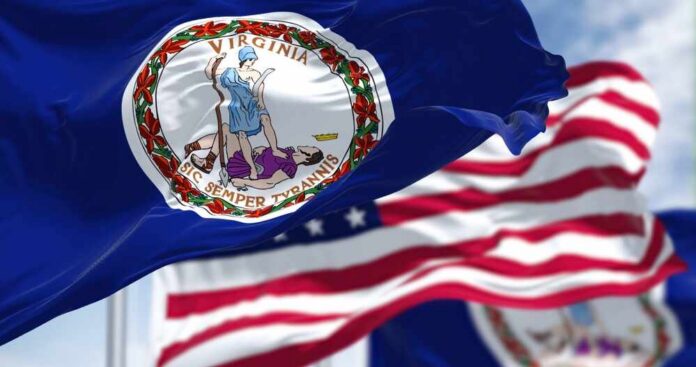
Virginia’s 2026 congressional maps could be thrown into chaos after the state attorney general asked the U.S. Supreme Court for an emergency intervention just days after Virginia’s high court tossed a voter-approved redistricting referendum.
Quick Take
- Virginia Attorney General Jay Jones filed an emergency request at the U.S. Supreme Court after the Virginia Supreme Court voided an April 21 redistricting referendum that passed with about 52% support.
- The Virginia Supreme Court split 4–3 and ruled the referendum unconstitutional on process grounds, with election-timing concerns also weighing over the dispute.
- The U.S. Supreme Court asked Virginia Republicans to respond by May 14 at 5 p.m. ET, signaling the justices may move quickly on the so-called “shadow docket.”
- Analysts quoted in local coverage describe the appeal as a longshot because much of the case centers on state constitutional procedure rather than a clear federal question.
Emergency Appeal Puts Virginia’s Election Calendar Back in Play
Virginia Attorney General Jay Jones, a Democrat, has asked the U.S. Supreme Court to step in on an emergency basis after the Virginia Supreme Court invalidated a statewide redistricting referendum approved April 21. Jones is seeking a stay that would effectively pause the state court’s ruling while the justices consider whether federal election-law principles are implicated. The Supreme Court set an unusually fast timetable, ordering a response from Virginia Republicans by May 14 at 5 p.m. ET.
The state dispute matters because redistricting determines which party is favored in congressional contests, and Virginia remains politically competitive. Supporters of the referendum argue the vote reflected the “will of the people,” while opponents argue the process used to put the measure on the ballot did not comply with the state constitution. Jones says overturning the referendum creates immediate harm by destabilizing election administration and leaving campaigns and voters uncertain about which district lines will apply for 2026.
Why Virginia’s Supreme Court Voided the Referendum
The Virginia Supreme Court’s 4–3 decision centered on constitutionality and procedure, with the court concluding the referendum mechanism used to enact the new mapping plan did not satisfy state requirements. Coverage of the ruling emphasized that election timing compounded the problem because early voting was underway, raising the stakes of any sudden switch in rules or maps. For conservatives who already distrust last-minute rule changes, the timing reinforces a simple concern: election systems work best when rules are stable and transparent long before ballots are cast.
Jones sharply criticized the state ruling, casting the court as “Republican-led” and politically motivated, and he pursued steps to delay the state court mandate while escalating the matter to Washington. That partisan framing is common in modern redistricting fights, but it also underlines a broader national frustration shared across ideologies: too many election disputes now look like procedural warfare designed to lock in advantages, rather than a good-faith attempt to create districts that voters can understand and trust.
The Federal Hook: “Election” Timing and the Shadow Docket
Jones’s emergency filing leans on the idea that federal law treats an “election” as more than a single day, particularly once voting has begun, and that state-court intervention can collide with federal election rules. He also points to U.S. Supreme Court precedent that limits how state courts can reshape election rules in ways that intrude on the legislature’s role. Even so, reporting indicates legal observers see a major obstacle: much of the underlying dispute involves state constitutional processes that federal courts typically avoid second-guessing.
The fact the Supreme Court demanded a rapid response does not guarantee relief, but it does suggest the justices are at least weighing whether the requested stay is necessary to prevent confusion. In practice, shadow-docket decisions often focus on “irreparable harm” and election administration rather than a full merits review. If the court denies a stay, Virginia likely continues operating under the existing framework while the litigation plays out, but prolonged uncertainty could still squeeze election offices and candidates on deadlines.
What’s at Stake for Representation—and Public Trust
Partisan stakes are openly discussed because district lines can tilt the playing field. In this fight, Republican-aligned voices argue the referendum maps would have created an overwhelmingly Democratic advantage in Virginia’s congressional delegation, while Democrats argue the referendum was a valid public check on political mapmaking. The deeper issue for many voters is legitimacy: when courts, legislatures, and statewide referenda collide, large blocs of Americans conclude the system is designed for insiders, not citizens, and that outcomes hinge on procedure rather than persuasion.
Virginia’s case also lands in a broader moment when many Americans—right and left—say government institutions protect entrenched interests and career incentives over accountability. Conservatives tend to see these episodes as evidence that rules get rewritten to benefit the political class, while many liberals see court decisions as power plays that diminish democratic participation. Unless Virginia quickly reaches a clear, lawful endpoint, this dispute risks becoming another example voters cite when they say the process is rigged, even when the courts insist they are enforcing legal limits.
He Isn't Just Unhinged, He's REALLY Stupid: Check Out How BAD VA AG Jay Jones' LATEST SCOTUS Appeal Ishttps://t.co/FCH0HoYsqH pic.twitter.com/ejOyZ9GSlm
— Twitchy Team (@TwitchyTeam) May 12, 2026
For now, the concrete next step is procedural: Republicans’ response is due May 14, and the Supreme Court could act within days. If the justices grant a stay, Virginia could be forced into a fast-moving shift with major implications for candidate filings and voter information. If the stay is denied, the state may still face months of litigation, but with fewer immediate disruptions. Either way, the episode shows how redistricting has become a proxy battle over who writes the rules—and whether ordinary voters can trust the referee.
Sources:
Virginia AG files emergency appeal to US Supreme Court on maps
Jay Jones seeks to delay referendum ruling (May 8, 2026)