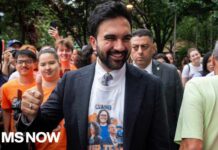


As California’s political establishment rallies around Xavier Becerra’s surprise advance to the governor’s race final, many voters see one more sign that the system keeps elevating insiders while core problems like housing, costs, and trust in elections remain unresolved.
Story Snapshot
- Former federal health secretary and California attorney general Xavier Becerra has secured a spot on the November governor ballot in the state’s top-two primary system.[1][4]
- Becerra’s rise underscores how California’s primary rules reward name recognition and establishment backing more than clear solutions on housing, education, and affordability.[1][2]
- His campaign leans heavily on lawsuits against Donald Trump and federal health-care victories, leaving gaps for voters who want concrete state-level plans.[1][3]
- The race is unfolding amid deep bipartisan frustration that entrenched political elites prosper while ordinary Californians struggle to reach the American Dream.
Becerra’s Advance: Insider Experience Meets Voter Fatigue
Democrat Xavier Becerra, a longtime officeholder and former United States secretary of health and human services, has officially advanced to California’s November governor election after pulling ahead in the late-counted primary ballots.[1][4] CalMatters describes him as a “career politician” whose pitch to voters is built around his lengthy résumé and his willingness to confront President Donald Trump, a choice that highlights partisan battle lines more than day-to-day governance.[1] For many Californians, those credentials may signal competence, yet they also reinforce a sense that only insiders with deep networks can realistically compete.
California’s top-two primary rules mean that all candidates run on one ballot and the two highest vote-getters move on, regardless of party, which favors contenders with money, media access, and organizational support.[2] Becerra finished with nearly 27 percent of the vote in a crowded field as of the latest count, enough to secure one of the two November slots, even though millions of ballots were still being processed.[1] That outcome demonstrates his statewide viability but does not tell voters whether his leadership will ease housing shortages, improve schools, or lower everyday costs that squeeze families on both the right and the left.
What Becerra Says He Has Delivered — And What We Can Verify
Becerra’s campaign frames him as the one candidate ready to “Build, Protect, and Lead California,” emphasizing his record of suing the Trump administration and expanding health coverage at the federal level.[3] His site boasts that as California attorney general he sued Trump more than 120 times, claiming landmark wins to protect the Affordable Care Act, workers, and young immigrants known as Dreamers.[3] As health secretary, he credits himself with helping expand Affordable Care Act coverage to more than 24 million Americans and pressing drug companies to cut prescription costs.[3] These are specific and testable claims, but they mostly describe national legal and health policy battles rather than direct results on California’s housing and schooling crises.
Supporters point to this record as evidence of executive competence: Becerra has run a major state law office and a powerful federal department, dealing with complex regulations, budgets, and lawsuits that shape people’s lives.[1][2] According to his biography, he previously served as California attorney general from 2017 to 2021, after a long stint in Congress, and would become the first Latino elected governor in the state’s history if he wins in November.[1][2] That history matters symbolically and administratively, yet the available reporting does not show clear, measurable improvements in California’s housing affordability, education outcomes, or cost of living tied directly to his past leadership.
Horse-Race Coverage, Election Doubts, and the Deepening Trust Gap
News coverage of Becerra’s advance has focused heavily on who cleared the primary hurdle and how late returns reshuffled the field, rather than on detailed side-by-side comparisons of candidates’ plans.[1][2][4] CalMatters notes that California’s top-two system was supposed to promote moderation but usually produces a conventional Democrat-versus-Republican matchup, encouraging a horse-race narrative that treats advancement as proof of merit even when issue competence remains largely unexamined.[2] This style of reporting reinforces a familiar frustration: the public is told who is winning before they fully understand what any front-runner will do about runaway housing costs, health-care bills, or failing schools.
The atmosphere around the race is further clouded by election skepticism, as Trump-aligned voices question California ballot counting and hint at irregularities, despite officials and journalists emphasizing the normal pace of tallying millions of votes.[1][2][4] For many conservatives, these doubts tap into long-standing concerns about transparency and coastal political machines, while many liberals worry that such claims undermine faith in elections without evidence. In both camps, there is a growing belief that powerful elites in both parties play by their own rules while ordinary Americans are left to absorb higher rents, medical debt, and an economy that rarely rewards hard work the way the American Dream once promised.
Sources:
[1] Web – Former HHS Secretary Xavier Becerra advances to California governor …
[2] Web – Becerra Advances in California Governor Race as Hilton, Steyer Battle …
[3] Web – The top-two primary was supposed to change California politics. Did it …
[4] Web – Xavier Becerra advances to California’s Nov. governor election